


What role do selection software tools play in the design of cooling systems?
Selection software makes it possible to simulate thermal loads, climatic conditions, and design variables in order to determine the optimal configuration of cooling towers, dry coolers, or chillers. They provide comparative analyses of capacity, energy consumption, noise levels, and operating costs.
The goal is to ensure the right balance between performance, energy efficiency, and operating expenses.
These tools reduce design time and minimize the risk of errors, allowing designers to compare different technologies (such as adiabatic and evaporative systems), including from the perspective of resource usage, and to evaluate their behavior under real operating conditions. They automate the most complex calculations, improve dimensional accuracy of components, and immediately flag any incompatibilities or exceeded limits.
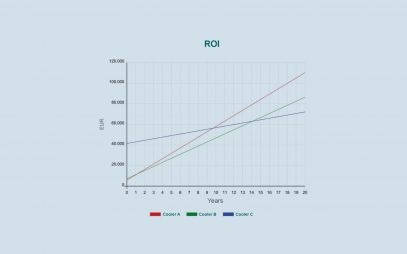
Key advantages include: precise component selection (such as compressors in chillers), energy optimization with life-cycle cost (LCC) analysis, and performance simulations that prevent oversizing. Selection and configuration software can also estimate economic indicators such as return on investment (per unit of time) and operating costs, providing both technical and decision-making support. Another benefit is the ability to generate technical reports, facilitating collaboration between designers, engineering teams, and sales engineers.
In summary, selection software integrates calculation, simulation, and analysis, making system design faster, more accurate, and more sustainable.
Learn more
Resource and Efficiency Optimization of Cooling Systems: How to Assess It
The comparison between different cooling technologies: a calculation software can now fulfill this task based on real climatic data.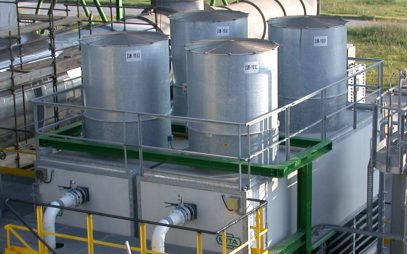
Industrial Plant Cooling: 12 + 1 Things to Consider before Looking for a Manufacturer
Is this the first time you have to deal with the cooling of your industrial plant? Or maybe do you wish to see a complete reference framework to carry out this task for your company? These guidelines will help you choose the best cooling technology for your plant's specific project needs.Related products
-
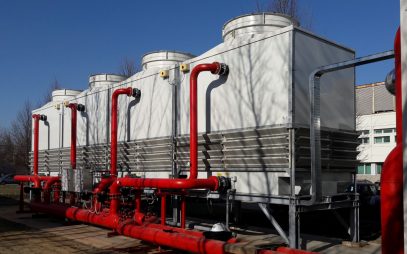 for medium to large systems
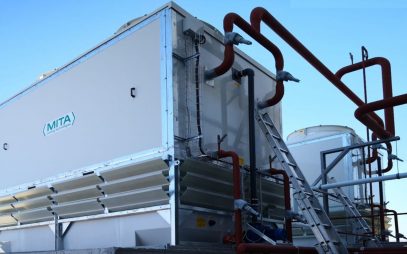
PME-E Open-Circuit Evaporative Cooling Tower
A light and non-corrodible open-circuit evaporative cooling tower: process industry and HVAC operators will be able to count on its multiple versions and ease of transport and installation.
-
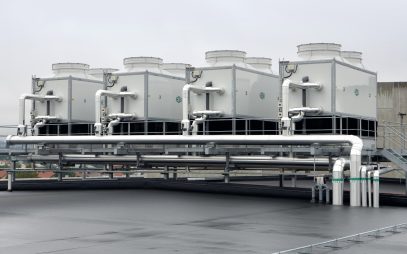 for plants of all sizes with fluids to be maintained
MCC Closed-Circuit Evaporative Cooling Tower
Some industries need to keep the chemical-physical characteristics of the process fluids unchanged: in these cases, MCC closed-circuit evaporative cooling tower joins the game. Possibility to work in free-cooling mode. MCC-EC version available with electronically controlled fans.
-
 For condensing refrigerants (Ammonia NH3)
MCE Evaporative Condenser
Compact, efficient and easily accessible: MCE evaporative condenser ensures refrigeration operators all the operating standards of its own technology class. The typical MITA evaporative coolers’ durability over time is a plus. MCE-EC version available with electronically controlled fans.
-
 for medium and large plants
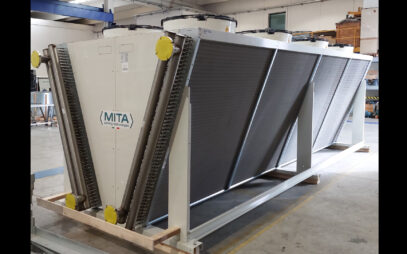
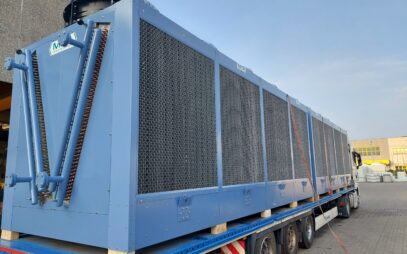
MDC-V V-Type Dry Cooler
Ease of installation, operation and maintenance–serving even large systems: this is the MDC-V V-shaped dry cooler. The peculiar design of the coils allows a larger heat exchange surface area than table-top dry cooler systems. All in an easily scalable solution.
- for medium and large plants
PAD-XL W Adiabatic Cooler
Ideal for those who want to use very little cooling water while eliminating its management, or as an alternative to the classic dry cooler, especially with performance in the hottest times of the year in mind.
- with axial fans
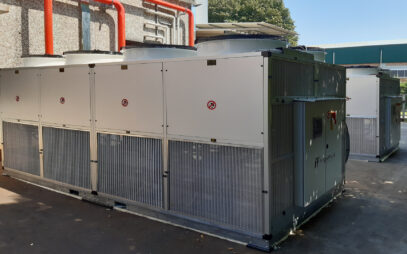
RW ax Air-Cooled Chiller
RW ax chillers are air-cooled liquid chillers with EC Brushless axial fans. Designed for energy efficiency and performance optimization, they operate at fluid outlet temperatures from 1°C to 20°C and outdoor temperatures up to 40°C.
Newsletter
Subscribe to MITA newsletter and stay updated on technical solutions for industrial and civil cooling and get to know our offer.