



Reduced footprint. Ideal for small systems and small installation spaces.
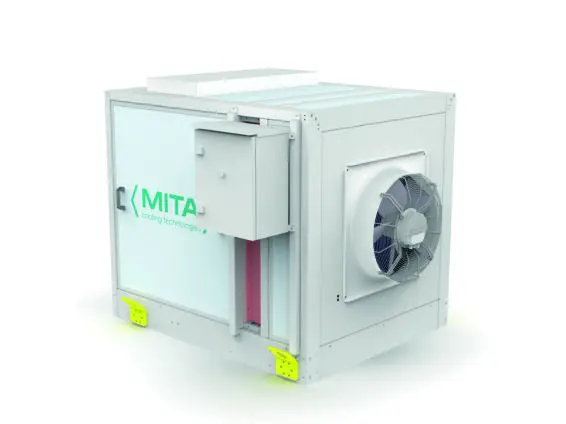
Resource optimization of adiabatic cooling, for low flow rates and thermal capacities (20-50 kW), a more efficient alternative than a simple dry cooler. PAD-XS has a compact design with small footprint and low noise: an excellent solution for process cooling and small HVAC systems.
Reduced footprint. Ideal for small systems and small installation spaces.
Automated operation. Inverters and probes to regulate fans and wetting cycles.
Compact and integrable design. Simple and easily integrated into existing systems.
Efficiency and optimal resource utilization. MITA solutions are selected to suit the individual plant through advanced software.
Quick pay-back. Pre-selection together with the client, based on the client's project requirement.
Industry 4.0. Ability to control, monitor and collect data on company management system.
With the PAD-XS adiabatic cooler (or adiabatic dry cooler), operations managers achieve adiabatic cooling optimization even for low flow rates and thermal capacities.
As with any adiabatic system, the mode of operation is twofold, depending on the time of day and year (all parameterizable thanks to the standard PLC).
The system involves the direct use of mains water that requires no specific treatment. In general, the amount of water is minimal and limited to the summer season at a predetermined threshold. No accumulation, no stagnation.
Each unit in the PAD-XS series is fully accessible, for internal inspections, easily, quickly and safely. Low noise levels guaranteed.
Ask for InformationUn sistema di raffreddamento adiabatico (dry cooler adiabatico per liquidi, condensatore adiabatico per gas) è un sistema che combina il principio di un dry cooler (raffreddatore a secco) con il pre-raffreddamento adiabatico dell’aria esterna.
Read all FaqBoth systems use water, but in different amounts, in different ways, and with different levels of efficiency. The direct evaporative
Read all FaqSome main advantages can be enumerated, related to reduced water use and optimized operation during different seasons and times of the day.
Read all FaqModern evaporative coolers use automatic blowdown systems controlled by conductivity sensors, partial recovery of discharge water, and optimized make-up strategies. Adiabatic systems, on the other hand—with the proper use of sensors and PLC-based parameter settings—use water only during periods of maximum thermal load, reducing overall consumption compared to traditional cooling towers (though with some loss of efficiency). The adoption of recovery circuits also allows part of the water to be reused in any cooling system that relies on this resource.
Read all FaqAdiabatic cooling systems (adiabatic dry coolers for liquids, adiabatic condensers for gases) are the optimal solution where the goal is to save water, either due to the absence of that resource or to risks associated with its management.
Read all FaqIn an evaporative system, approximately 2% of the mass to be cooled evaporates and is released back into the environment.
Read all FaqDuring the design phase, the use of selection and configuration software makes it possible to compare different solutions—chillers, cooling towers, adiabatic coolers, or dry coolers—by simulating their seasonal performance and heat loads. These digital tools also estimate energy and water consumption and help optimize system sizing.
Read all FaqAlchemist is a patented solution from MITA Cooling Technologies that combines the useful effect of subcooling with the natural and efficient operating principle of an adiabatic cooler in a single device.
Read all FaqA fan draws in a portion of air from the outside environment and then runs it through a finned coil inside which circulates the refrigerant to be subcooled.
Read all Faq
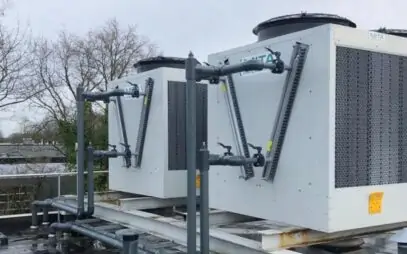
Significant water savings and a wide range of available solutions-these two factors were key for a Dutch manufacturing company replacing its cooling systems. Two adiabatic dry coolers from MITA Cooling Technologies.
Learn More
MITA Cooling Technologies scores, together with the agency EETS, a new achievement for the food industry: a poultry products company chose the PAD-V adiabatic cooler for a section of its production processes.
Learn More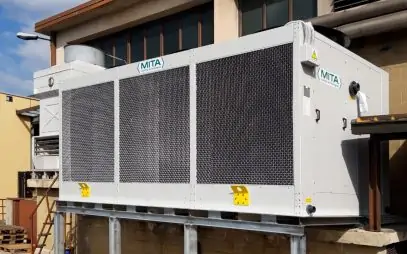
A plastics processing company in the province of Lecco has chosen the PAD-V cooler for the cooling circuit of its production plant: the eco-sustainable system that cuts water and energy bills.
Learn MoreSubscribe to MITA newsletter and stay updated on technical solutions for industrial and civil cooling and get to know our offer.