


Choosing the best industrial cooling system depends on several factors. Among them: the required cooling capacity.
Read all FaqSaving water with cooling technologies
Power of analytics software to cut your billWater saving means making ends meet for a plant and supporting the circular economy: cooling technologies must also play their part. Engineers and end-users can make the right choice thanks to increasing ranges of technical solutions and support by advanced analytics software.
Water Saving in Cooling Systems: Frequently Asked Questions and Expert Answers
Evaporative and adiabatic cooling both take advantage of air to lower the temperature of a process fluid (water, water and glycol, gas).
Read all FaqBoth systems use water, but in different amounts, in different ways, and with different levels of efficiency. The direct evaporative
Read all FaqThe structure and components of the two systems are, of course, a consequence of the two different operating principles.
Read all FaqSome main advantages can be enumerated, related to reduced water use and optimized operation during different seasons and times of the day.
Read all FaqModern evaporative coolers use automatic blowdown systems controlled by conductivity sensors, partial recovery of discharge water, and optimized make-up strategies. Adiabatic systems, on the other hand—with the proper use of sensors and PLC-based parameter settings—use water only during periods of maximum thermal load, reducing overall consumption compared to traditional cooling towers (though with some loss of efficiency). The adoption of recovery circuits also allows part of the water to be reused in any cooling system that relies on this resource.
Read all FaqIn an evaporative system, approximately 2% of the mass to be cooled evaporates and is released back into the environment.
Read all FaqChoosing the system best suited to your needs depends on several factors, mainly related to the specifics of the individual plant project to be developed: an exchange of information with a cooling consultant is often helpful.
Read all FaqThe calculation of ROI in a cooling system is a percentage indicator that shows how much economic value is generated compared to the capital invested.
Read all FaqThe Life Cycle Cost (LCC) is a calculation method used to evaluate the total cost of a cooling system over
Read all FaqThis is not something to worry about: the cooling consultant knows the right questions to ask for the selection of the best cooler, supported also by advanced software for calculation, selection, and resource optimization.
Read all FaqYes, there are calculation and sizing software: some manufacturers and cooling consultants use them in recent years to make a selection that is as tailored as possible to the needs of the individual project.
Read all FaqSelection software makes it possible to simulate thermal loads, climatic conditions, and design variables in order to determine the optimal configuration of cooling towers, dry coolers, or chillers. They provide comparative analyses of capacity, energy consumption, noise levels, and operating costs. The goal is to ensure the right balance between performance, energy efficiency, and operating expenses.
Read all FaqDuring the design phase, the use of selection and configuration software makes it possible to compare different solutions—chillers, cooling towers, adiabatic coolers, or dry coolers—by simulating their seasonal performance and heat loads. These digital tools also estimate energy and water consumption and help optimize system sizing.
Read all FaqSaving water in plants
One of the requests from engineering offices, plant designers and end-users is to look at cooling solutions that further reduce water use. This is especially the case in contexts where “blue gold” is an all the more rare resource.
There is a growing sensitivity towards sustainability, in favour of a circular economy: reusing cooling water in the best possible way, also reducing CO2 emissions and energy use.
Tell Us Your Needs
Which cooling technology saves water?
Adiabatic coolers, also know as adiabatic dry coolers, are a good balance between saving resources (including water) and optimising efficiency. A zero-water consumption solution is simply a classic dry cooler, but in some contexts, it may not provide the necessary performance and have a major impact on production and energy use. Cooling towers and evaporative condensers can guarantee a reduction in water use, if selected and managed correctly.
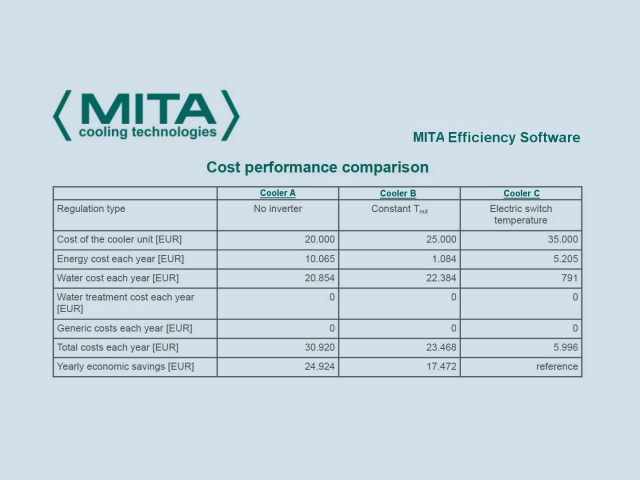
So which cooling system to choose? It is best to let an advanced solution comparison and resourse use analysis software such as MITA Efficiency “do the talking”. With the help of a cooling consultant who can suggest the most appropriate technology.
Advantages
- Choice of many water-saving cooling solutions.
- “Objective” selection by software, tailored to the needs of the individual system.
- Technical and commercial advice from cooling professionals.
MITA Cooling Solutions
-
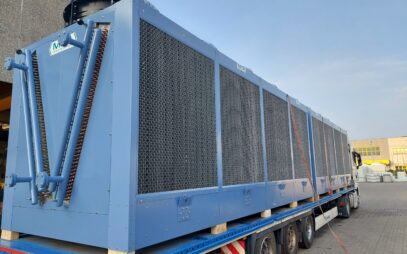 for medium and large plants
PAD-XL W Adiabatic Cooler
Ideal for those who want to use very little cooling water while eliminating its management, or as an alternative to the classic dry cooler, especially with performance in the hottest times of the year in mind.
-
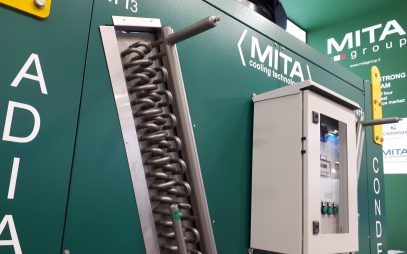 for condensing refrigerants (Ammonia NH3)
PAD-XL R Adiabatic Condenser
Ideal for water saving maintaining a high efficiency. All operations are managed by PLC with the possibility of remote management in “Industry 4.0” mode. Both HVAC and refrigeration sectors can be served.
Do you wish to see more?
Newsletter
Subscribe to MITA newsletter and stay updated on technical solutions for industrial and civil cooling and get to know our offer.