


Performance depends primarily on air temperature, relative humidity, and wet-bulb temperature, which represents the theoretical cooling limit that can be achieved. Altitude, thermal variations throughout the year, and surrounding obstructions also affect efficiency.
Read all FaqCooling System Upgrade
To scale up efficiency and effectivenessA few, necessary steps are enough. An industrial cooler must support all kinds of new requirement in the industrial or civil process: higher temperature ranges, water and energy optimization, new sound levels.
Requirements: the extra boost in performance and efficiency
Does your industrial process or civil air conditioning system need to step up its performance? Or does your process consume too much and need to be optimised? Do you have new noise limits to comply with by law?
The reasons for upgrading or modifying a system can be many, and the cooling technologies must also support this process.
Tell Us Your Needs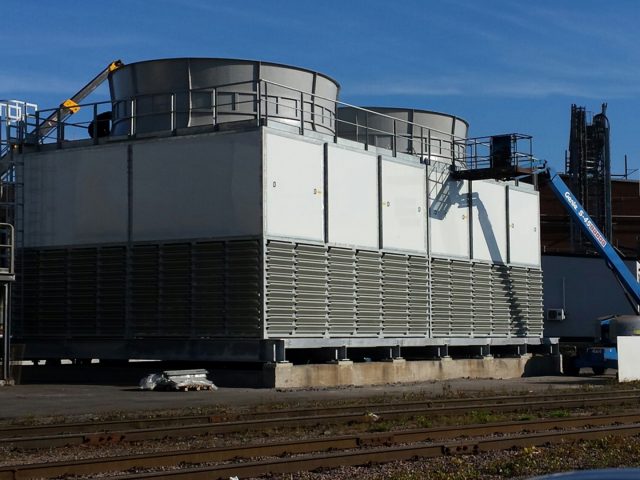
Improving Cooling Performance: Frequently Asked Questions and Expert Answers
Variable-speed fans, controlled by inverters, adjust the airflow according to the thermal load.
Read all FaqIn summary: Low installation and maintenance costs and very high cooling efficiency.
Read all FaqWet cooling towers are known for their high energy and thermal efficiency, making them an ideal solution for dissipating excess heat in air-conditioning systems and industrial processes. Thanks to the principle of evaporative cooling, these technologies can achieve very low cooling temperatures while using minimal electrical energy and water. In many applications, these lower temperatures allow the overall system to operate with reduced power consumption, directly contributing to energy savings and a lower environmental impact.
Read all FaqThe required cooling capacity, and the consequent sizing of the cooling system, can be calculated by an engineer experienced in industrial cooling.
Read all FaqAmbient air is the heat-transfer medium that enables water evaporation and thermal exchange. Its temperature and relative humidity determine the efficiency of the process: under dry-air conditions, the evaporative effect is at its maximum.
Read all FaqBoth systems use water, but in different amounts, in different ways, and with different levels of efficiency. The direct evaporative
Read all FaqIn summary: high cooling efficiency, low operating costs, and others related to the operation of the technology.
Read all FaqChoosing the system best suited to your needs depends on several factors, mainly related to the specifics of the individual plant project to be developed: an exchange of information with a cooling consultant is often helpful.
Read all FaqThe approach to the wet-bulb temperature is the difference between the leaving water temperature (or water–glycol mixture) and the air’s wet-bulb temperature. The smaller this difference, the higher the cooling tower’s efficiency.
Read all FaqThe calculation of ROI in a cooling system is a percentage indicator that shows how much economic value is generated compared to the capital invested.
Read all FaqYes, there are calculation and sizing software: some manufacturers and cooling consultants use them in recent years to make a selection that is as tailored as possible to the needs of the individual project.
Read all FaqSelection software makes it possible to simulate thermal loads, climatic conditions, and design variables in order to determine the optimal configuration of cooling towers, dry coolers, or chillers. They provide comparative analyses of capacity, energy consumption, noise levels, and operating costs. The goal is to ensure the right balance between performance, energy efficiency, and operating expenses.
Read all FaqDuring the design phase, the use of selection and configuration software makes it possible to compare different solutions—chillers, cooling towers, adiabatic coolers, or dry coolers—by simulating their seasonal performance and heat loads. These digital tools also estimate energy and water consumption and help optimize system sizing.
Read all FaqSolution: enlarging or upgrading the cooling system
It is not always necessary to replace an old cooler with a new one. Existing cooling devices can also be upgraded by redesigning or adding some components or actual modules:
- the motor-fan units,
- heat exchange sections,
- integrated control equipment for parameter automation and/or remote monitoring (Industry 4.0),
- or an entire plug&play cooling cell.
All components that increase the efficiency and effectiveness of a system.
Contact Us and Find How We WorkConsulting and listening: the tool that makes the difference
It is essential to rely on a good industrial cooling consultant: a successful project starts with gathering the right information during the plant inspection.
For some years now, MITA has also been using software for cooler configuration and performance pre-analysis: an additional service for plant managers and engineering offices to help them choose the best cooler.
Contact Us and Find How We WorkUpgrading a system with a remanufactured cooler
If you need more efficiency and heat output in heat disposal, a remanufactured cooler can also meet that need.
With an added advantage: the raw materials and energy used for remanufacturing are lower than for a totally new product. This, of course, translates into lower acquisition costs for the customer.
The planet also thanks, with the lower use of resources for production.
Find out the serviceDo you wish to have free advice?
Contact Us NowMITA Cooling Solutions
-
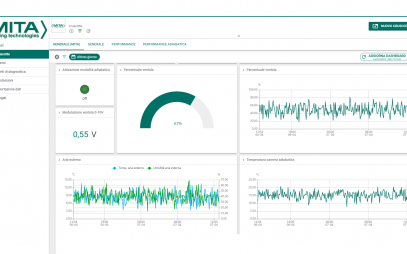 for Remote Management of the Cooler
MITA IoT Platform 4.0
Your cooler is transformed into a connected cooler “industry 4.0”: performance, resourse use, maintenance just a click away.
-
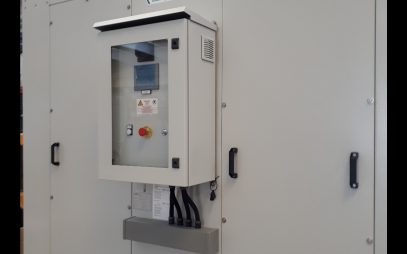 inverter system to modulate the speed of fans in cooling towers
MITA Control System
MITA Control System allows programming and modulating cooler’s performances during its operations in a very simple way. Electricity use optimization is granted.
-
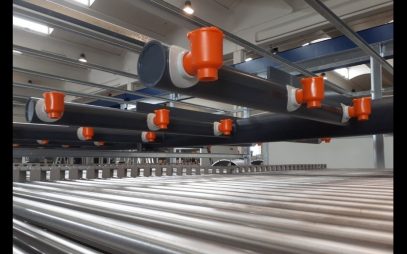
Spare Parts
Keep your cooling system efficient and safe by replacing its obsolete components. The result? It will look like a newly installed technology.
Do you wish to see more?
Newsletter
Subscribe to MITA newsletter and stay updated on technical solutions for industrial and civil cooling and get to know our offer.