


Un sistema di raffreddamento adiabatico (dry cooler adiabatico per liquidi, condensatore adiabatico per gas) è un sistema che combina il principio di un dry cooler (raffreddatore a secco) con il pre-raffreddamento adiabatico dell’aria esterna.
Read all FaqAdiabatic Cooling Systems
Extraordinary water and energy savings, optimized performance: adiabatic coolers and condensers are increasingly appreciated by engineers and production managers who seek the right balance between the advantages of the dry and evaporative systems.
Adiabatic Cooling: Frequently Asked Questions and Expert Answers
Both systems use water, but in different amounts, in different ways, and with different levels of efficiency. The direct evaporative
Read all FaqSome main advantages can be enumerated, related to reduced water use and optimized operation during different seasons and times of the day.
Read all FaqModern evaporative coolers use automatic blowdown systems controlled by conductivity sensors, partial recovery of discharge water, and optimized make-up strategies. Adiabatic systems, on the other hand—with the proper use of sensors and PLC-based parameter settings—use water only during periods of maximum thermal load, reducing overall consumption compared to traditional cooling towers (though with some loss of efficiency). The adoption of recovery circuits also allows part of the water to be reused in any cooling system that relies on this resource.
Read all FaqAdiabatic cooling systems (adiabatic dry coolers for liquids, adiabatic condensers for gases) are the optimal solution where the goal is to save water, either due to the absence of that resource or to risks associated with its management.
Read all FaqIn an evaporative system, approximately 2% of the mass to be cooled evaporates and is released back into the environment.
Read all FaqDuring the design phase, the use of selection and configuration software makes it possible to compare different solutions—chillers, cooling towers, adiabatic coolers, or dry coolers—by simulating their seasonal performance and heat loads. These digital tools also estimate energy and water consumption and help optimize system sizing.
Read all FaqAlchemist is a patented solution from MITA Cooling Technologies that combines the useful effect of subcooling with the natural and efficient operating principle of an adiabatic cooler in a single device.
Read all FaqA fan draws in a portion of air from the outside environment and then runs it through a finned coil inside which circulates the refrigerant to be subcooled.
Read all FaqRequirement: to save water and energy
Operating complex plants with ever-decreasing resources means that it is natural to pay attention to water and energy consumption. A need that cooling technologies have long since remedied.
Tell us Your Needs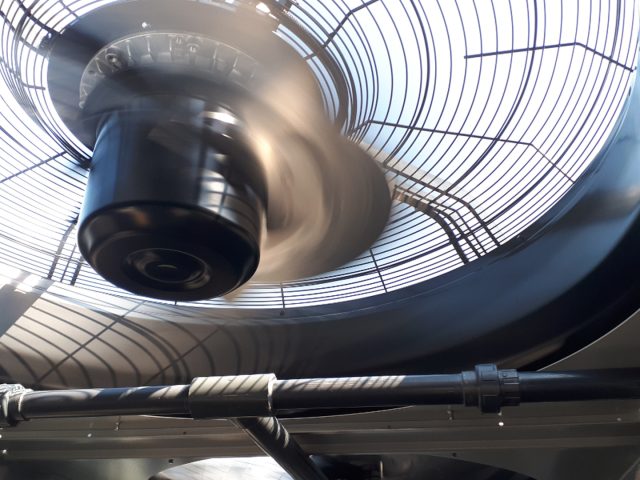
Solution: adiabatic coolers and condensers
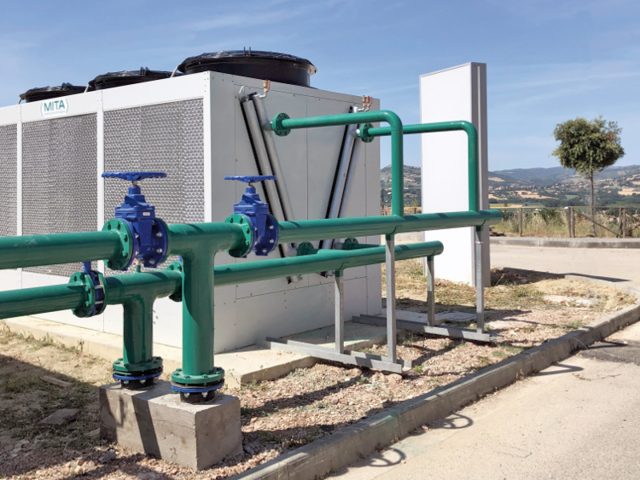
The adiabatic industrial liquid cooler and the adiabatic gas condenser are the natural solution to optimise performance and save resources at the same time:
- adjustable fan rotation speed,
- modulation of wetting cycles
- and flexible operation change from dry to adiabatic are managed by a PLC.
Some technological solutions, such as humidifier packs made of highly absorbent materials, further reduce water consumption.
Adiabatic Cooling System: What to KnowWhat are the expected lifespan and return on investment of an adiabatic cooling system?
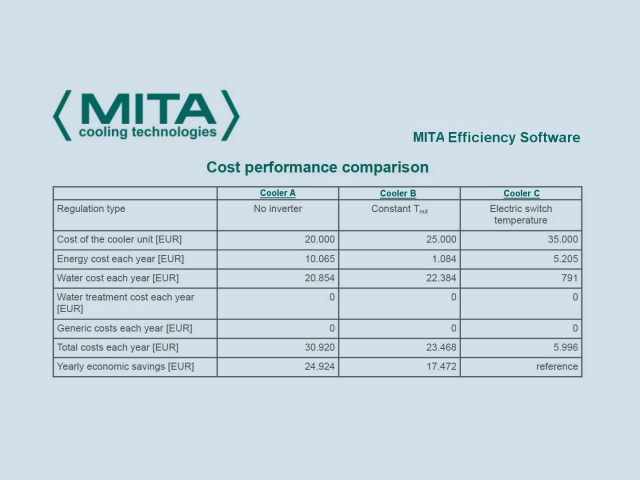
Among the commercially available cooling systems, the industrial adiabatic cooler (or “dry cooler with adiabatic pre-coolers”) is one of those with the longest expected life cycle, especially if designed with certain features. Quick pay-back is also guaranteed by low water and energy consumption. Always bearing in mind, of course, any technical limitations that a cooling consultant may have to face: process temperature or installation space.
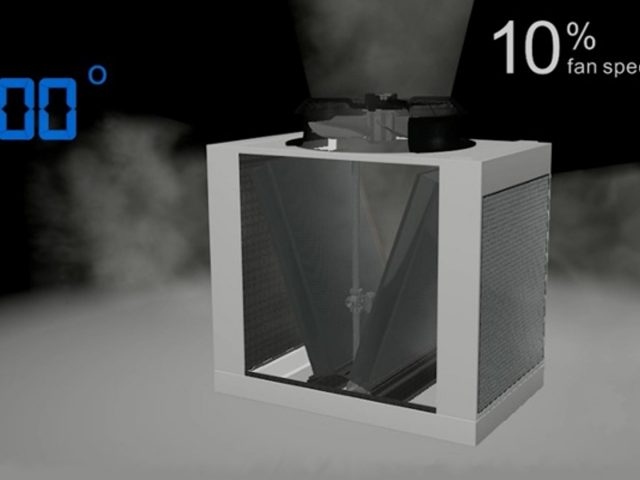
Adiabatic operation in hot periods...
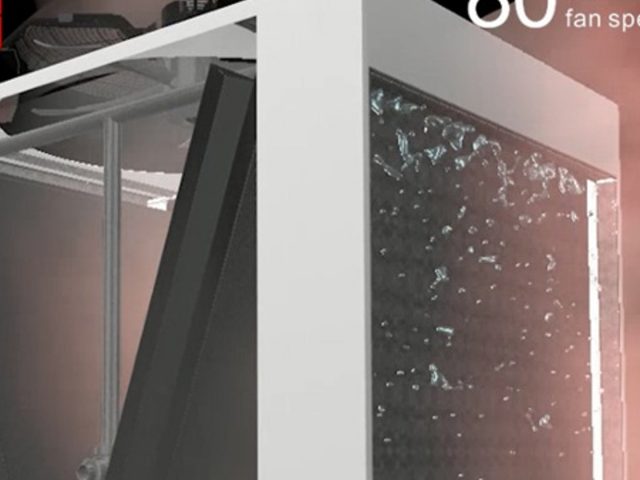
- The external air passes through the humidifier pack.
- The adiabatically cooled air is conveyed to the finned coils: the efficiency increases.
- Capable of working at lower ambient temperatures.
- No direct contact between water and finned coils.
... Dry operation in cold weather
- The external air is aspirated and conveyed directly to the coils.
- Humidification is deactivated: no water in the circuit.
- Fan speed modulated according to temperature.
- Guaranteed water and energy savings.
Do you wish to have free advice?
Contact Us NowMITA Cooling Solutions
-
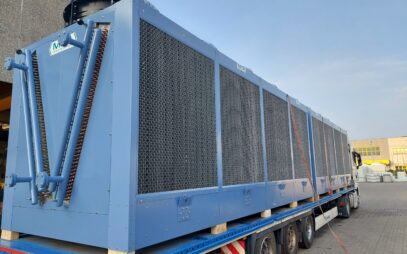 for medium and large plants
PAD-XL W Adiabatic Cooler
Ideal for those who want to use very little cooling water while eliminating its management, or as an alternative to the classic dry cooler, especially with performance in the hottest times of the year in mind.
-
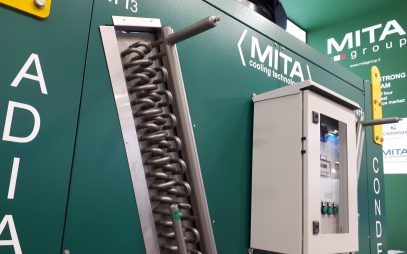 for condensing refrigerants (Ammonia NH3)
PAD-XL R Adiabatic Condenser
Ideal for water saving maintaining a high efficiency. All operations are managed by PLC with the possibility of remote management in “Industry 4.0” mode. Both HVAC and refrigeration sectors can be served.
-
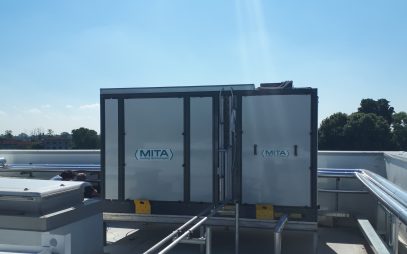 to subcool R744 in transcritical plants
Alchemist Adiabatic Sucooler
Performance, savings and environmental sustainability thanks to a patented Plug & Play subcooler for refrigeration systems working with R744 (CO2) and fluorinated refrigerants (HCFC, HFC, HFO).
Some MITA Projects
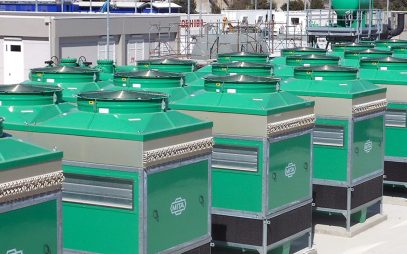
PAD Adiabatic Coolers for Ansaldo Energia (Utilities)
One of the most advanced poles for the study of power grids in Europe, in Sardinia, also bears the signature of MITA Cooling Technologies: this is thanks to 13 adiabatic coolers supplied to Ansaldo, among the main implementers of the work.
Learn More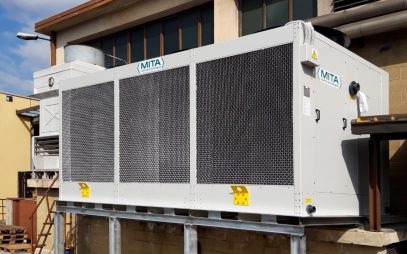
Extraordinary water savings for the plastics industry with the MITA adiabatic system
A plastics processing company in the province of Lecco has chosen the PAD-V cooler for the cooling circuit of its production plant: the eco-sustainable system that cuts water and energy bills.
Learn More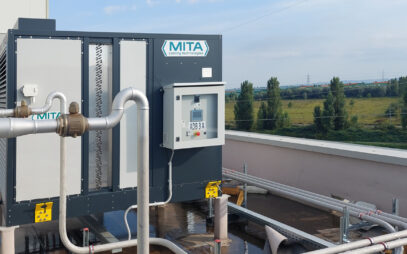
Adiabatic Subcoolers in Supermarkets in Northern Italy
Sustainability without loss of performance: this was the challenge of a large-scale retail player with many supermarkets in northern Italy to which MITA supplied several Alchemist adiabatic subcoolers.
Learn MoreSee More Technologies
Newsletter
Subscribe to MITA newsletter and stay updated on technical solutions for industrial and civil cooling and get to know our offer.