


È possibile ottenere la massima efficienza energetica attraverso una serie di accorgimenti: ad esempio, dimensionando un sistema di raffreddamento in base alle esatte necessità di raffreddamento, o poco sovra-dimensionato.
Read all FaqDesign
What stage are you in on your cooling project?New system, upgrade of an existing system, replacement of an obsolete cooler: here you will find the basic information for your project.
Cooling Project: Frequently Asked Questions and Expert Answers
Choosing the best industrial cooling system depends on several factors. Among them: the required cooling capacity.
Read all FaqThere are several types of industrial cooling systems. These include: cooling towers and adiabatic coolers.
Read all FaqEach type of industrial chiller has its own distinctive characteristics. In general, air cooling has lower efficiencies than other systems, especially in warmer seasons. In contrast, evaporative systems (wet cooling towers and evaporative gas condensers) have higher efficiencies.
Read all FaqThey vary according to type, capacity, and specific characteristics: from a few thousand euros to hundreds of thousands.
Read all FaqThe required cooling capacity, and the consequent sizing of the cooling system, can be calculated by an engineer experienced in industrial cooling.
Read all FaqAmbient air is the heat-transfer medium that enables water evaporation and thermal exchange. Its temperature and relative humidity determine the efficiency of the process: under dry-air conditions, the evaporative effect is at its maximum.
Read all FaqChoosing the system best suited to your needs depends on several factors, mainly related to the specifics of the individual plant project to be developed: an exchange of information with a cooling consultant is often helpful.
Read all FaqThe approach to the wet-bulb temperature is the difference between the leaving water temperature (or water–glycol mixture) and the air’s wet-bulb temperature. The smaller this difference, the higher the cooling tower’s efficiency.
Read all FaqThe calculation of ROI in a cooling system is a percentage indicator that shows how much economic value is generated compared to the capital invested.
Read all FaqThe Life Cycle Cost (LCC) is a calculation method used to evaluate the total cost of a cooling system over
Read all FaqThis is not something to worry about: the cooling consultant knows the right questions to ask for the selection of the best cooler, supported also by advanced software for calculation, selection, and resource optimization.
Read all FaqYes, there are calculation and sizing software: some manufacturers and cooling consultants use them in recent years to make a selection that is as tailored as possible to the needs of the individual project.
Read all FaqSelection software makes it possible to simulate thermal loads, climatic conditions, and design variables in order to determine the optimal configuration of cooling towers, dry coolers, or chillers. They provide comparative analyses of capacity, energy consumption, noise levels, and operating costs. The goal is to ensure the right balance between performance, energy efficiency, and operating expenses.
Read all FaqDuring the design phase, the use of selection and configuration software makes it possible to compare different solutions—chillers, cooling towers, adiabatic coolers, or dry coolers—by simulating their seasonal performance and heat loads. These digital tools also estimate energy and water consumption and help optimize system sizing.
Read all FaqPre-order consultation with an industrial cooling expert is often free of charge: consultant and customer can then jointly evaluate the selection of a cooler, based on specific project needs.
Read all FaqDesign of a New Plant
Advisory and customizations beyond the catalogue
Let's talk about your project needs: this is where we start to select the cooling technology that best suits your system. Then we will design a truly tailor-made solution, with the required customizations, calculating the optimization of your consumption with advanced tools.
Learn More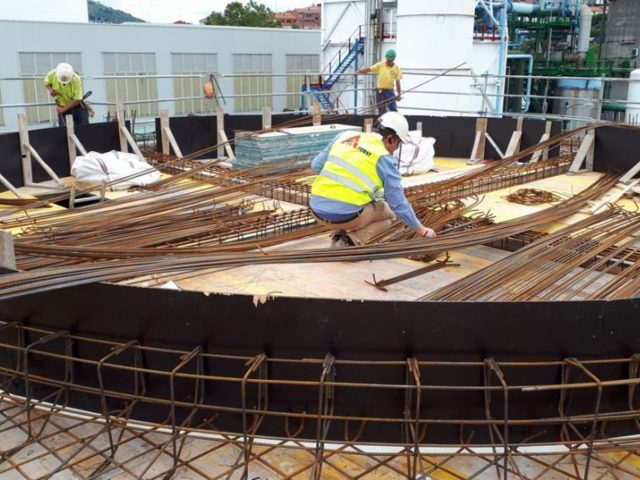
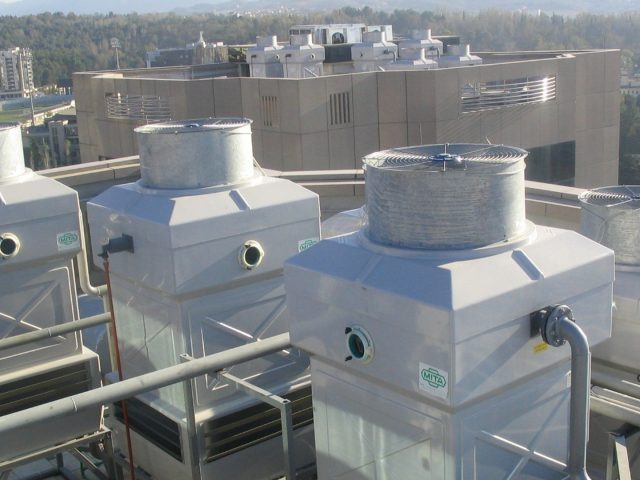
Replacement of a Cooling System
Full range of coolers and advanced selection tools
Cooling systems which are corroded or that no longer support initial performance: both can be replaced with the most diverse market solutions. As a premise, a serious pre-analysis must be carried out on the plant requirements.
Learn MoreCooling System Upgrade
To scale up efficiency and effectiveness
A few, necessary steps are enough. An industrial cooler must support all kinds of new requirement in the industrial or civil process: higher temperature ranges, water and energy optimization, new sound levels.
Learn More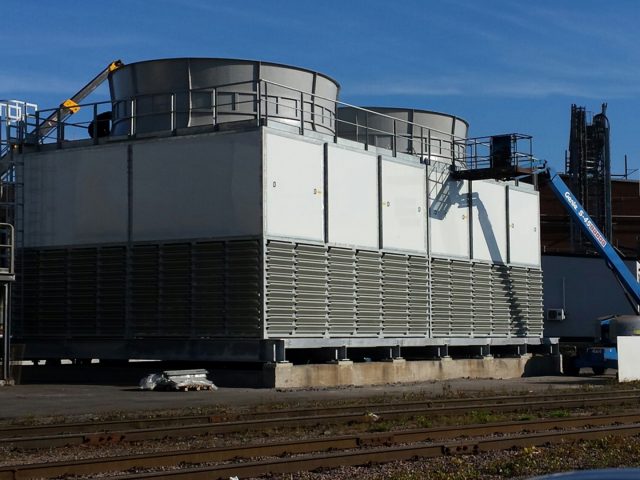
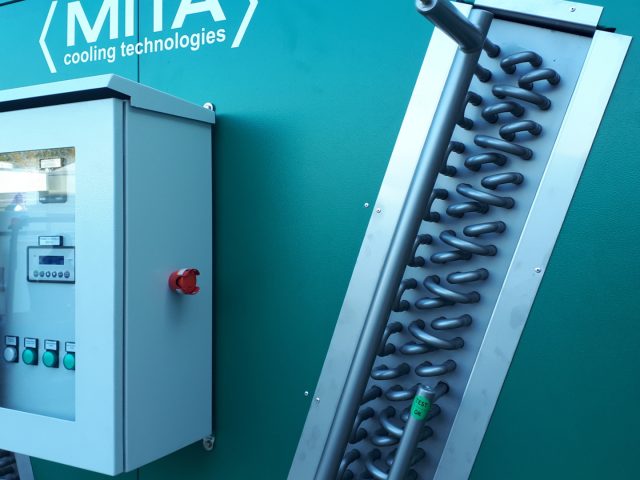
Revamping and Retrofitting of Cooling Systems
Your cooling technology back to initial efficiency. Or more
Refurbishment of large towers or targeted anti-corrosion interventions, change of internal components and retrofitting with subcooling: it is not always necessary to replace a cooler or an industrial chiller. It is often more useful to give it a plus.
Learn MoreSeveral cooling projects at a glance
Design of a new plant
Replacement of an existing plant
Upgrading of a plant
Revamping and Retrofitting
Do you wish to have free advice?
Contact Us NowMITA Cooling Solutions
-
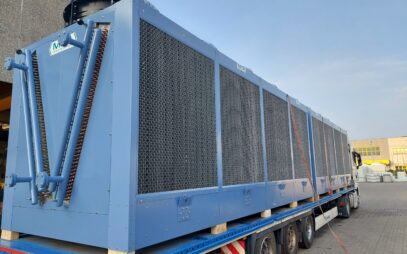 for medium and large plants
PAD-XL W Adiabatic Cooler
Ideal for those who want to use very little cooling water while eliminating its management, or as an alternative to the classic dry cooler, especially with performance in the hottest times of the year in mind.
-
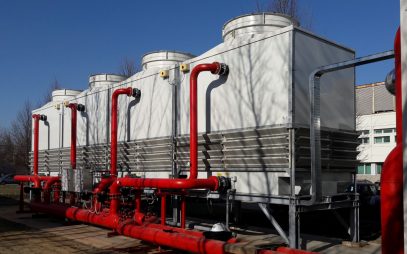 for medium to large systems
PME-E Open-Circuit Evaporative Cooling Tower
A light and non-corrodible open-circuit evaporative cooling tower: process industry and HVAC operators will be able to count on its multiple versions and ease of transport and installation.
Newsletter
Subscribe to MITA newsletter and stay updated on technical solutions for industrial and civil cooling and get to know our offer.