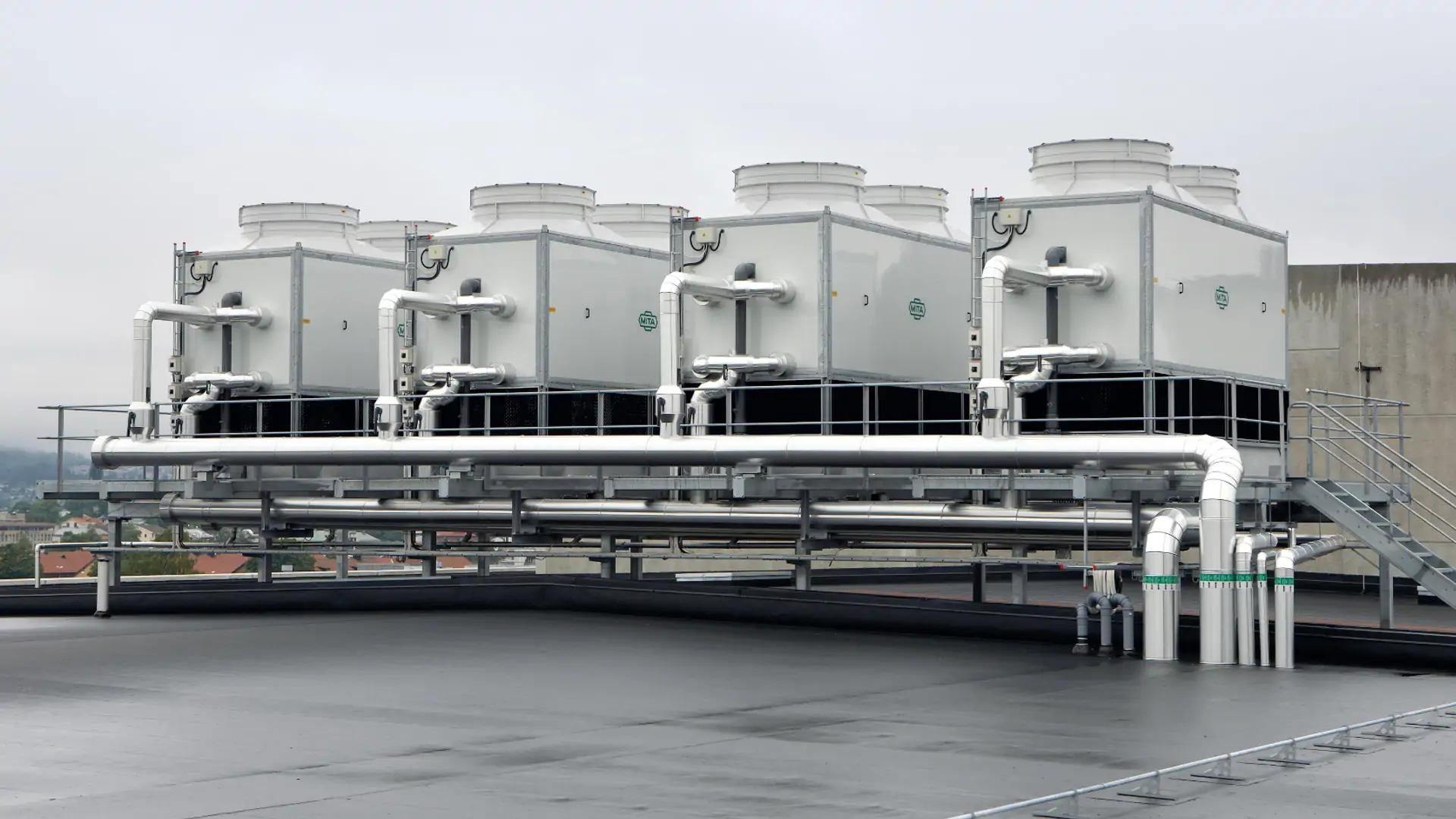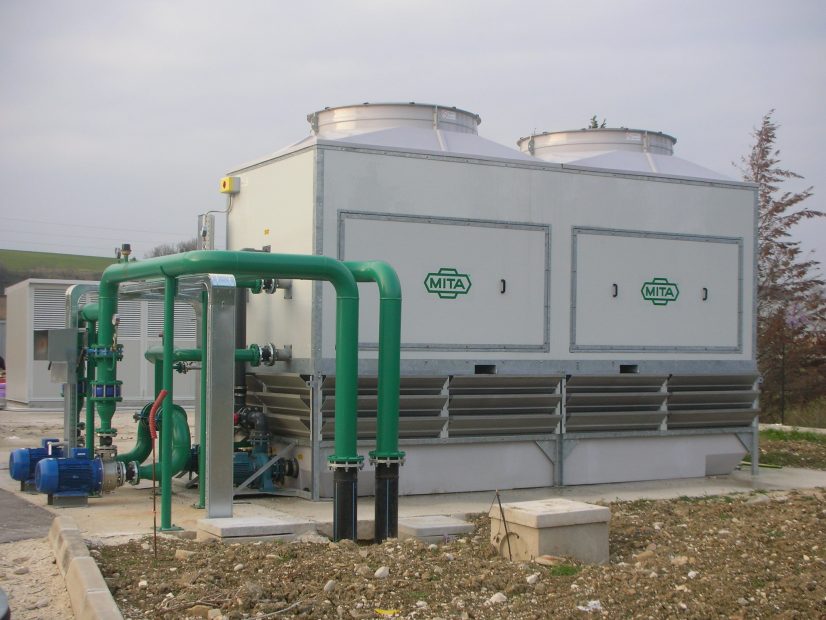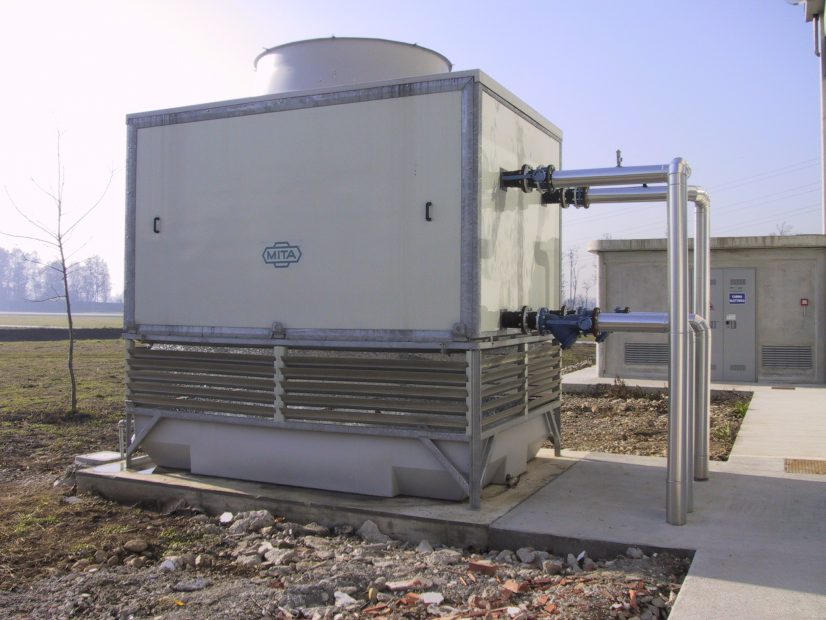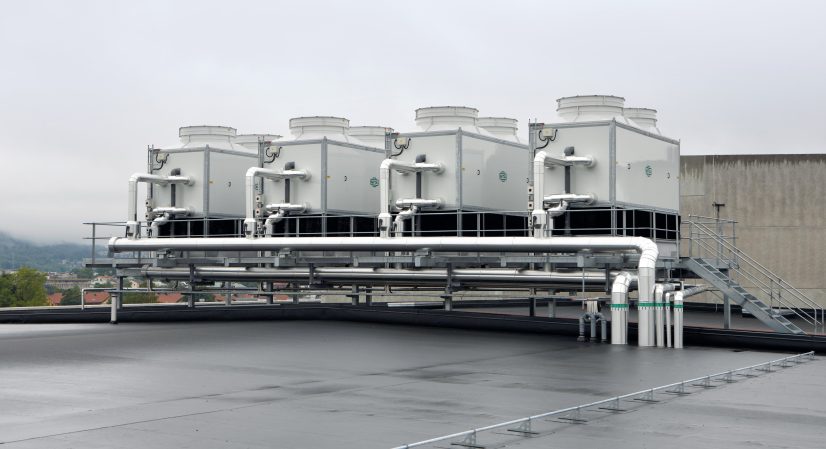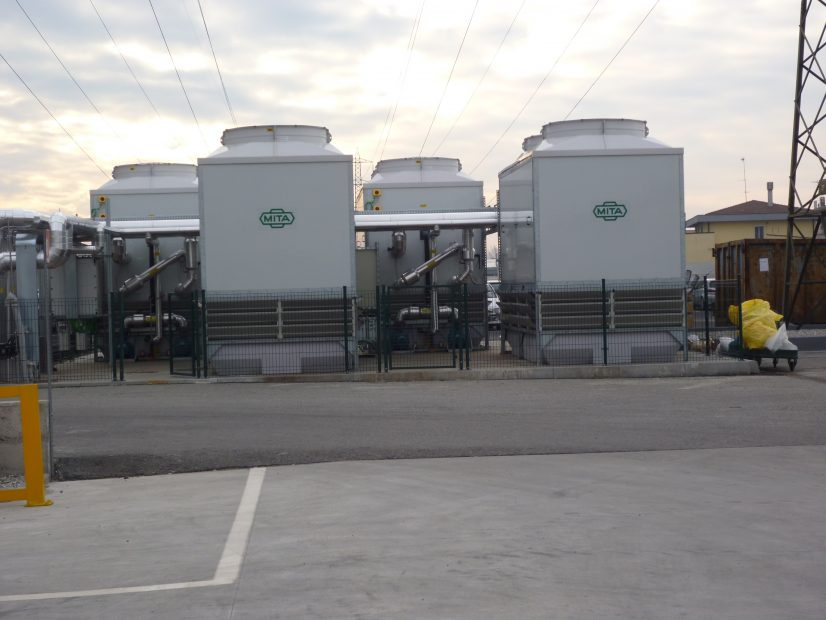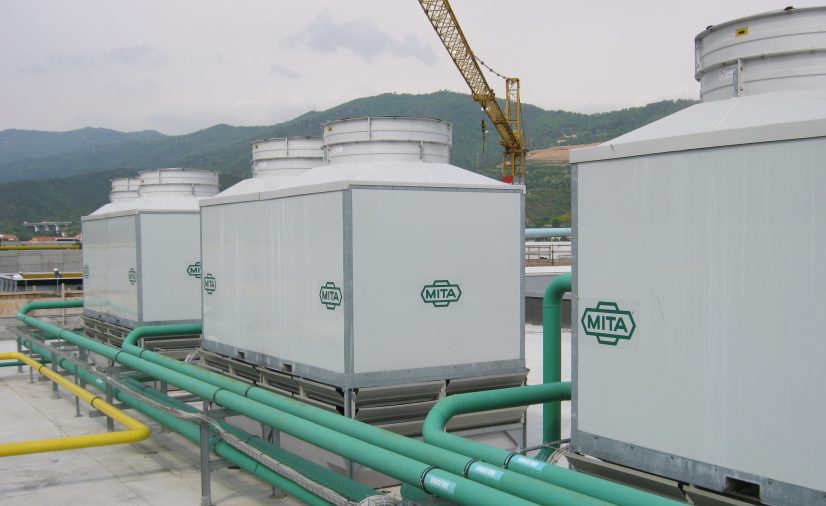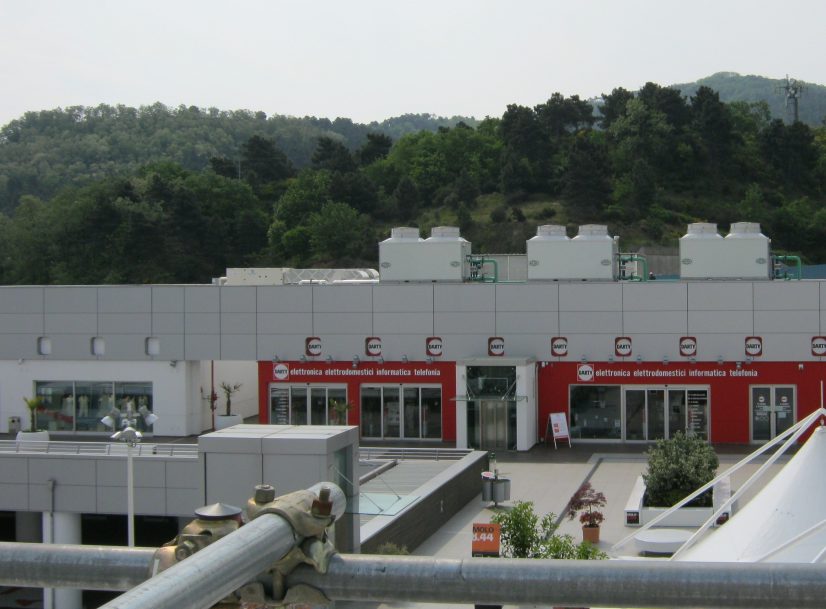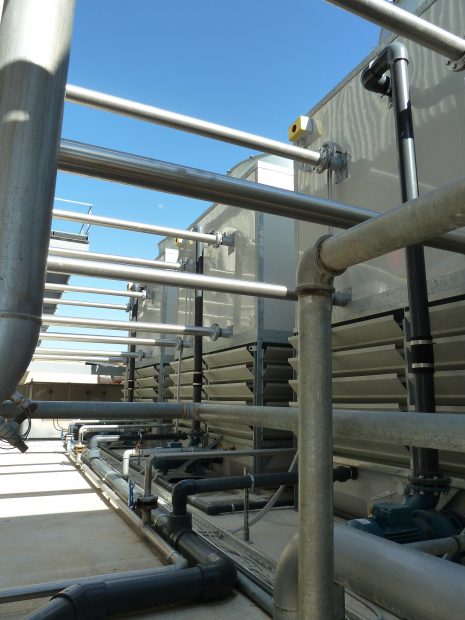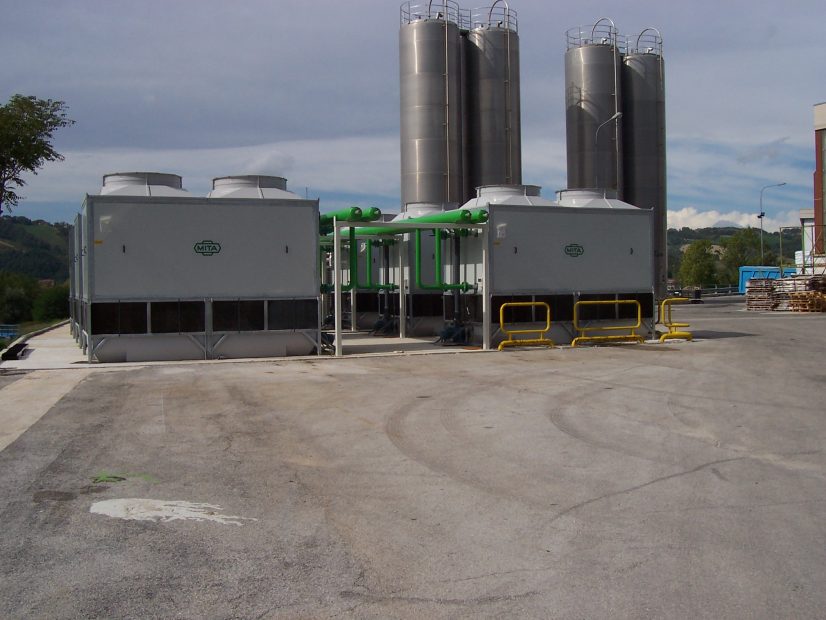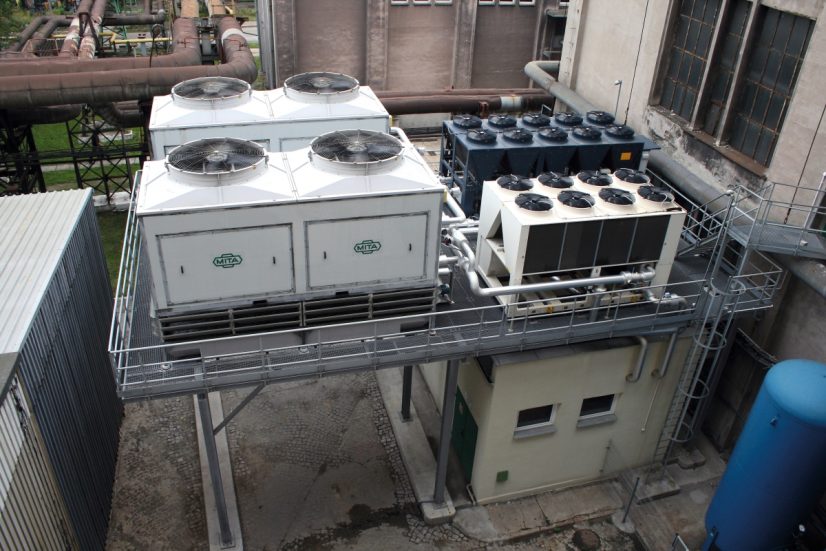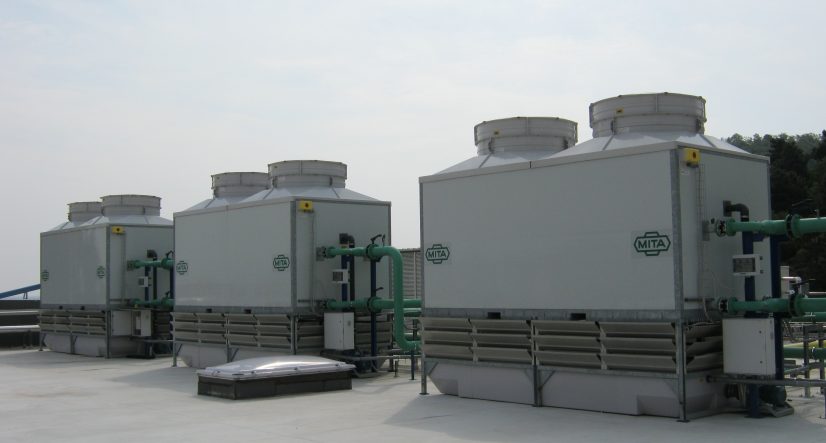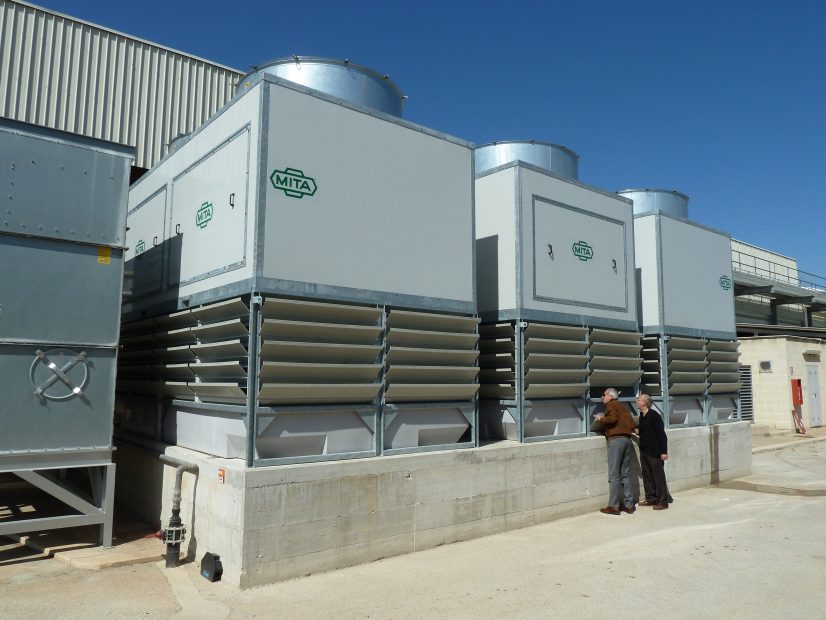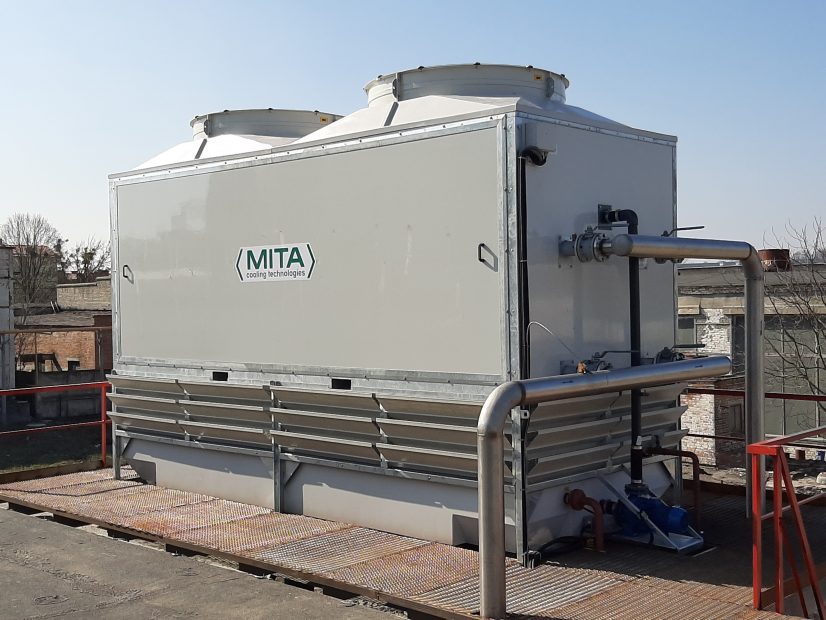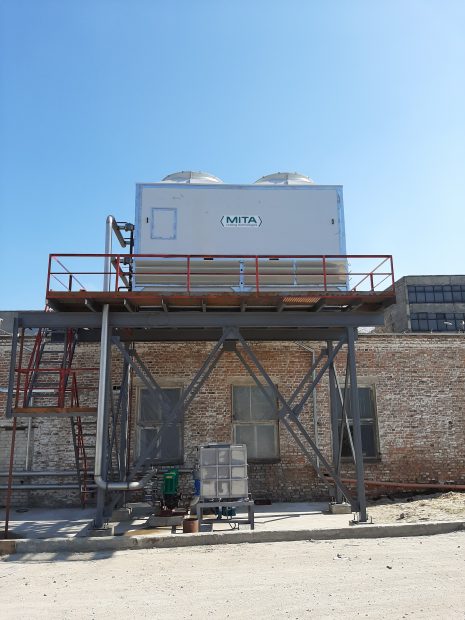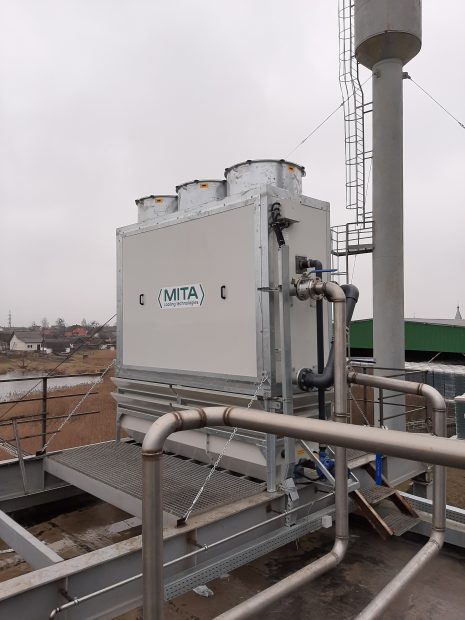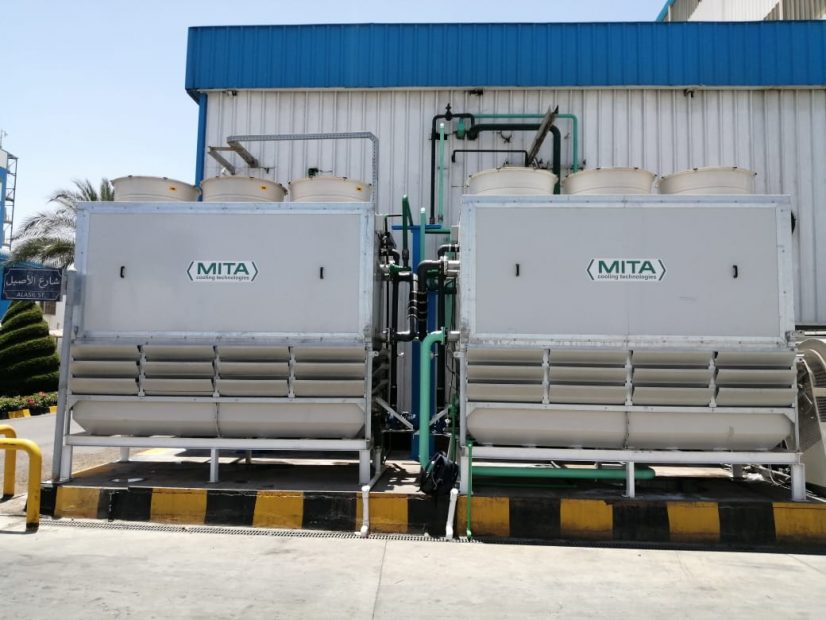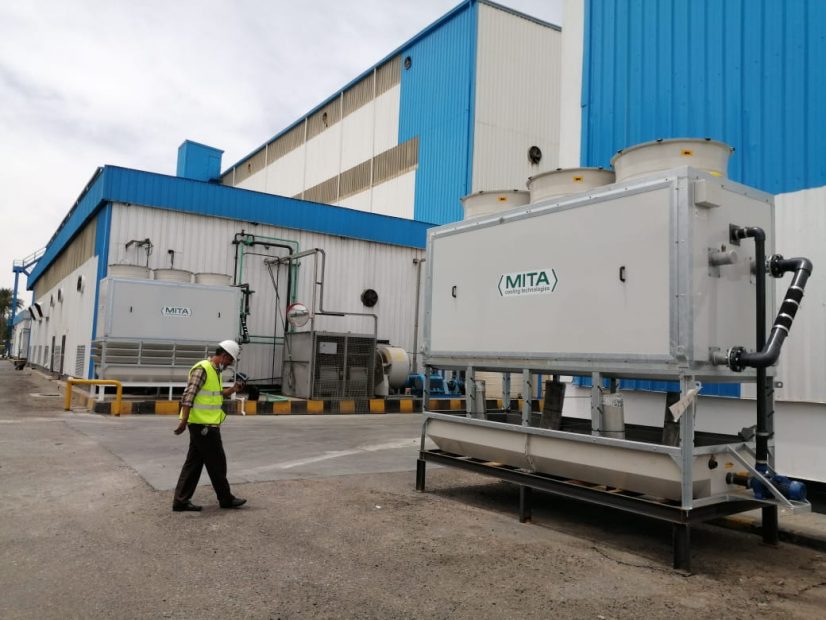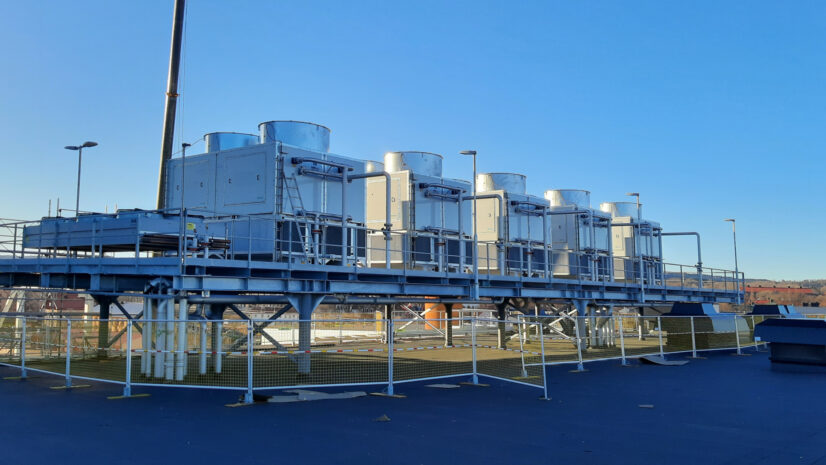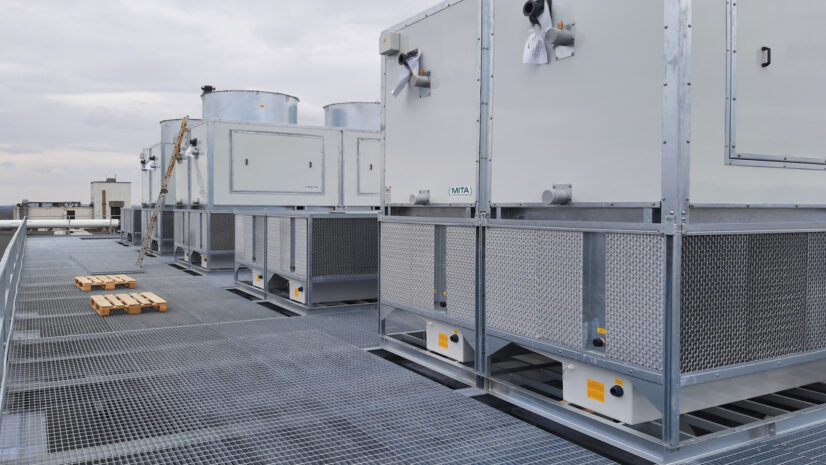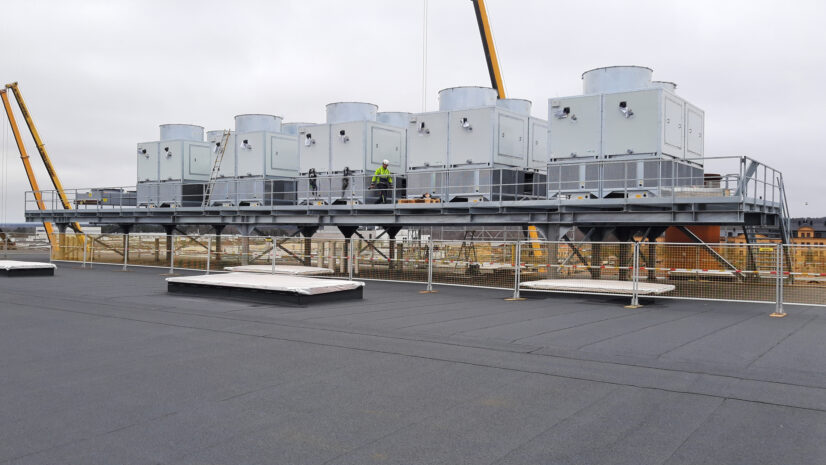
To keep unaltered cooling fluid's characteristics. Water, or the water with glycol mixture to be cooled, circulates in the battery.
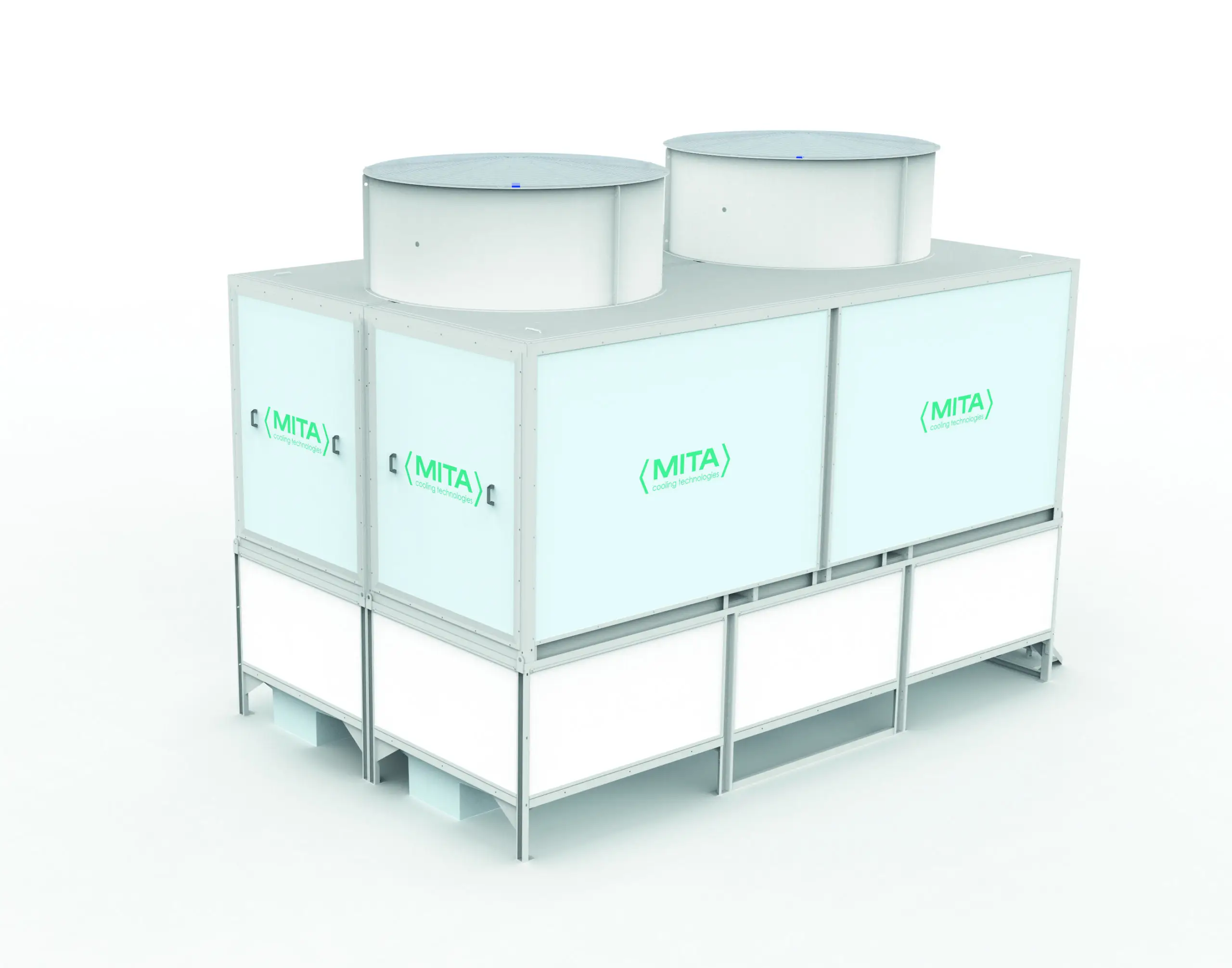
Some industries need to keep the chemical-physical characteristics of the process fluids unchanged: in these cases, MCC closed-circuit evaporative cooling tower joins the game. Possibility to work in free-cooling mode. MCC-EC version available with electronically controlled fans.
To keep unaltered cooling fluid's characteristics. Water, or the water with glycol mixture to be cooled, circulates in the battery.
Possibility of free cooling. Exploiting only the temperature difference with the external environment.
Easy accessibility. Completely removable walls for easy and total access to the internal components.
Efficiency and optimal resourse use. MITA solutions are selected through advanced software in order to fit the plant characteristics.
Industry 4.0. Possibility of control, monitoring and data collection on company management system.
Electronic Control. MCC-EC version available with electronically controlled fans.
The closed-circuit tower uses the same physical principle as the open circuit cooling tower. With one difference: the fluid to be cooled is introduced into a battery of pipes on which the water of the “small cooling circuit” is sprayed.
The MCC series closed circuit evaporative cooling towers are employed as an alternative to open-type cooling circuits with heat exchangers, in those cases in which the cooling fluid for the user’s equipment (generally water or water with glycol) must maintain its chemical and physical characteristics constant over time and unpolluted by external elements.
The difference between the two systems lies in the different type of circuit exploited for cooling the process fluid.
Read all FaqSafety is based on proper design, periodic maintenance, and effective water control. It is essential to prevent stagnation, ensure proper drainage, and maintain easy access to components for regular inspections.
Read all FaqBoth open-circuit and closed-circuit towers exploit a very efficient operating principle: forced evaporation of a minimum amount of water causes a lowering of the temperature of the main water mass.
Read all FaqIn direct evaporative cooling (open-circuit evaporative tower), the process water to be cooled is introduced into the tower and comes into direct contact with the outside air. The water evaporates directly into the air, removing heat and lowering its temperature — leveraging a simple natural principle: the forced evaporation of a small amount of water causes a temperature drop in the main water mass.
Read all FaqAmong in main advantages: no contamination of the primary circuit and reduced risk of freezing by being able to insert ethylene glycol into the circuit, for example.
Read all FaqYes, it is possible in the case of closed-circuit evaporative cooling towers.
Read all FaqThey vary according to type, capacity, and specific characteristics: from a few thousand euros to hundreds of thousands.
Read all FaqWet cooling towers are known for their high energy and thermal efficiency, making them an ideal solution for dissipating excess heat in air-conditioning systems and industrial processes. Thanks to the principle of evaporative cooling, these technologies can achieve very low cooling temperatures while using minimal electrical energy and water. In many applications, these lower temperatures allow the overall system to operate with reduced power consumption, directly contributing to energy savings and a lower environmental impact.
Read all FaqAll evaporative cooling systems use the evaporation of a small amount of water to lower the temperature of the larger mass of water. There are three main types of evaporative cooling systems: open circuit cooling towers, closed circuit cooling towers, and evaporative condensers.
Read all FaqFor large plants with fluids to be kept unaltered. With the MCC-T closed-loop evaporative tower, process fluids can be kept unaltered even in large plants. Some examples of applications: oil & gas, food industries, large paper mills. Easy transportation of modules over long distances with reduced costs.


More than a hundred years ago it was an apple orchard: now it is one of the most important food industries in Sweden. This is the company to which MITA Cooling Technologies and CAMPreq have provided solutions-as manufacturer and process cooling consultant, respectively.
Learn More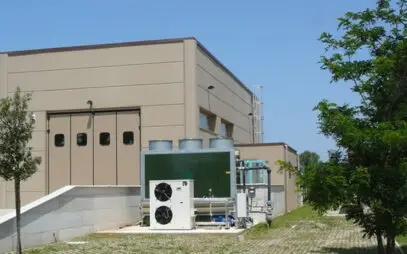
MITA Cooling Technologies and technology research in academia: in 2015, we participated in the tender for the cooling system of the 2 engine test benches attached to the Rotordinamica Laboratory of the University of Pisa.
Learn MoreSubscribe to MITA newsletter and stay updated on technical solutions for industrial and civil cooling and get to know our offer.