


What is the difference between cooling in HVAC systems and cooling for industrial applications?
The difference between HVAC (Heating, Ventilation and Air Conditioning) cooling and industrial cooling lies in their objectives, required precision, thermal loads, and equipment robustness. Both remove heat, but they do so for very different purposes and under distinct operational conditions.
- HVAC cooling is primarily aimed at ensuring human thermal comfort. It is used to maintain residential, commercial, or public environments at pleasant temperature and humidity levels. The thermal loads involved are moderate and variable, influenced by factors such as occupancy, lighting, or electronic devices. Operation is often intermittent, with daily or seasonal cycles. Equipment such as air conditioners, fan coils, and ducted systems is designed to distribute air efficiently. Cooling technologies (such as evaporative cooling towers, dry coolers, and adiabatic coolers) are typically used to condense water-cooled chillers, which are essential for climate control.
- Industrial cooling, on the other hand, is dedicated to thermal control of production processes and machinery. Here, precision is critical: even a few degrees of deviation can compromise product quality or equipment safety. Systems must often manage high and constant thermal loads. Operation is continuous—24/7—and installations are designed to withstand harsh environments and mechanical or thermal stress. Cooling technologies used (evaporative cooling towers, dry coolers, adiabatic coolers, process chillers) are robust, customizable, and engineered to maximize efficiency and operational longevity.
In summary, HVAC cooling focuses on human comfort, whereas industrial cooling focuses on process control. The former is designed for inhabited environments, while the latter supports energy-intensive production processes where continuity, precision, easy maintenance, and reliability are essential.
Learn more
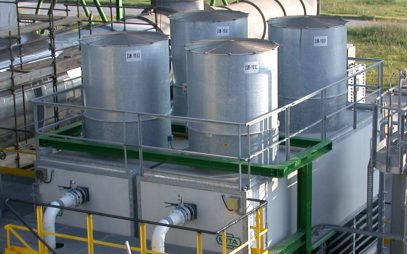
Industrial Plant Cooling: 12 + 1 Things to Consider before Looking for a Manufacturer
Is this the first time you have to deal with the cooling of your industrial plant? Or maybe do you wish to see a complete reference framework to carry out this task for your company? These guidelines will help you choose the best cooling technology for your plant's specific project needs.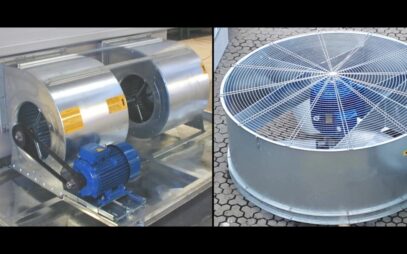
Cooling Towers Today: Centrifugal or Axial Fan?
An attempt to answer this question must necessarily start from history and the origins of cooling towers.
How can Noise Be reduced in Industrial Cooling Technologies?
Current cooling technology enables us to achieve optimal sound levels: therefore, it is essential to know the calculation criteria well.Related products
-
 for medium and large plants
PAD-XL W Adiabatic Cooler
Ideal for those who want to use very little cooling water while eliminating its management, or as an alternative to the classic dry cooler, especially with performance in the hottest times of the year in mind.
-
 for medium to large systems
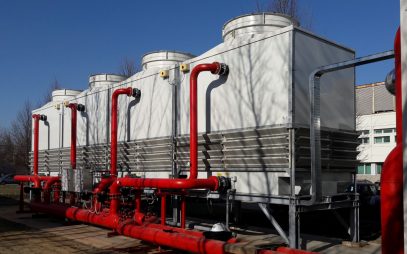
PME-E Open-Circuit Evaporative Cooling Tower
A light and non-corrodible open-circuit evaporative cooling tower: process industry and HVAC operators will be able to count on its multiple versions and ease of transport and installation.
-
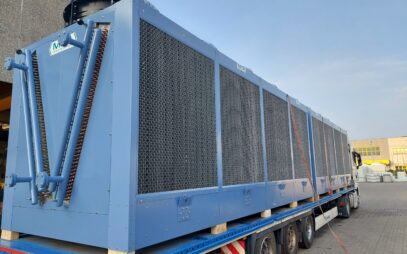
 for medium and large plants
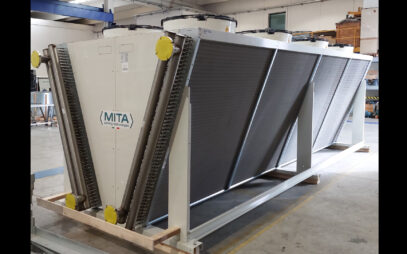
MDC-V V-Type Dry Cooler
Ease of installation, operation and maintenance–serving even large systems: this is the MDC-V V-shaped dry cooler. The peculiar design of the coils allows a larger heat exchange surface area than table-top dry cooler systems. All in an easily scalable solution.
Newsletter
Subscribe to MITA newsletter and stay updated on technical solutions for industrial and civil cooling and get to know our offer.