


How can sound levels be reduced in industrial cooling systems?
In sensitive locations, acoustic barriers and modular silencers are commonly adopted. Noise reduction in a cooling system involves three main areas: aerodynamics, components, and layout.
Acting at the source of the sound is the first step: low-RPM fans, blades with optimized airfoil profiles, and quiet motors help limit aerodynamic noise, while the use of inverters allows continuous speed modulation to adapt to varying load conditions. Regular maintenance of motors, bearings, and transmissions is also essential to prevent vibrations and noisy wear.
To reduce sound propagation, acoustic barriers, silencers, or sound-absorbing panels can be integrated, effectively lowering overall acoustic impact.
The arrangement of the equipment also influences acoustic comfort: a carefully designed layout directs airflow away from sensitive areas, while optional enclosures or shielding help contain noise without obstructing ventilation. In highly noise-sensitive environments, landscape solutions such as hedges or vegetative barriers can naturally absorb part of the sound.
In summary, a quiet system is the result of an integrated design that combines thermal, mechanical, and acoustic efficiency.
In urban areas in particular, noise reduction becomes a priority. Solutions include low-speed fans, silencers, and sound-absorbing barriers. Proper unit placement minimizes sound propagation. Compact, low-noise cooling systems are ideal for rooftop installations or locations near residential buildings.
Selection, configuration, and resource-optimization software make it possible—already during the design phase—to assess potential noise interference and simulate acoustic propagation, helping identify the best balance between performance and environmental comfort.
Learn more
How can Noise Be reduced in Industrial Cooling Technologies?
Current cooling technology enables us to achieve optimal sound levels: therefore, it is essential to know the calculation criteria well.
Industrial Plant Cooling: 12 + 1 Things to Consider before Looking for a Manufacturer
Is this the first time you have to deal with the cooling of your industrial plant? Or maybe do you wish to see a complete reference framework to carry out this task for your company? These guidelines will help you choose the best cooling technology for your plant's specific project needs.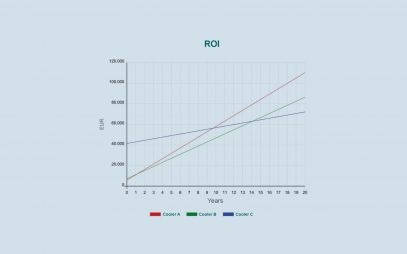
Resource and Efficiency Optimization of Cooling Systems: How to Assess It
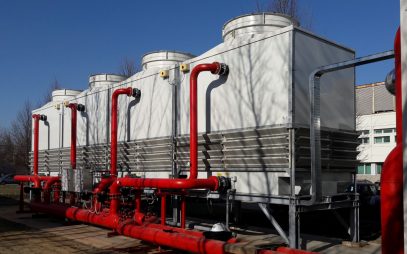
The comparison between different cooling technologies: a calculation software can now fulfill this task based on real climatic data.Related products
-
 for medium to large systems
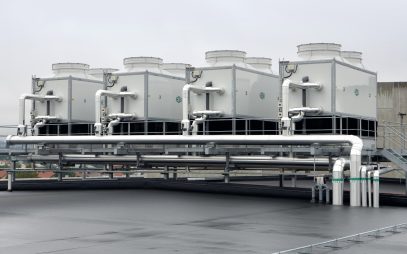
PME-E Open-Circuit Evaporative Cooling Tower
A light and non-corrodible open-circuit evaporative cooling tower: process industry and HVAC operators will be able to count on its multiple versions and ease of transport and installation.
-
 for plants of all sizes with fluids to be maintained
MCC Closed-Circuit Evaporative Cooling Tower
Some industries need to keep the chemical-physical characteristics of the process fluids unchanged: in these cases, MCC closed-circuit evaporative cooling tower joins the game. Possibility to work in free-cooling mode. MCC-EC version available with electronically controlled fans.
-
 for medium and large plants
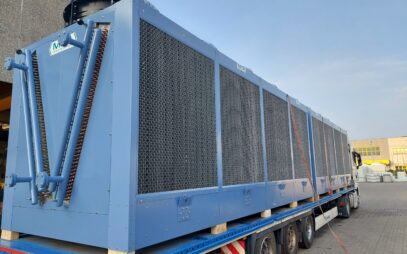
PAD-XL W Adiabatic Cooler
Ideal for those who want to use very little cooling water while eliminating its management, or as an alternative to the classic dry cooler, especially with performance in the hottest times of the year in mind.
Newsletter
Subscribe to MITA newsletter and stay updated on technical solutions for industrial and civil cooling and get to know our offer.