


What are the differences between Evaporative and Adiabatic Cooling?
Both systems use water, but in different amounts, in different ways, and with different levels of efficiency.
The direct evaporative cooling system (open circuit) relies on the forced evaporation of water in contact with air: evaporation removes heat and lowers the temperature of the cooling water to just a few degrees above the ambient wet-bulb temperature. In contrast, an adiabatic system uses water only during certain periods to pre-cool the air that will pass through the finned coils where the cooling water or fluid circulates.
From the perspective of temperatures and efficiency, in an evaporative system the theoretical minimum limit is the wet-bulb temperature (around 10 °C below ambient air) plus a few degrees due to the system’s actual approach. In an adiabatic system, the temperature reduction of the incoming air that will then cross the finned coils can be on the order of 5–10 °C below ambient air. The temperature of the water or cooling fluid inside the coils cannot reach the values possible with evaporative cooling: the resulting cooling is lower (closer to outdoor temperature), but it offers a major advantage in terms of significantly reduced water consumption.
- The evaporative system therefore delivers very high thermal efficiency: it cools closer to the wet-bulb temperature, reducing the residual temperature difference — essential when the coldest possible cooling fluid is required.
- The adiabatic system, while not achieving the same level of temperature reduction, provides an excellent balance between cooling performance and water use: it is particularly suitable where water availability is limited or where cooling-water management needs to be minimized.
In summary, if the goal is maximum efficiency (achievable temperature and footprint), evaporative cooling is preferred; if instead the goal is efficient cooling with minimal water consumption, an adiabatic system is a strategic choice. Which model to use depends on the operating context: water resources, climate, thermal load, and target temperature.
How can you find the optimal balance between these parameters and make an informed choice between evaporative and adiabatic cooling?
By performing the selection with comparison, configuration, and resource-optimization software.
Learn more
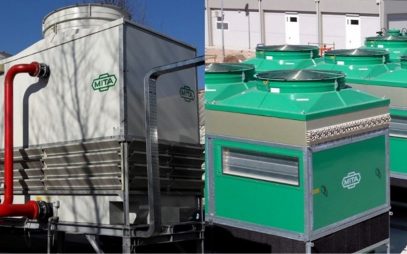
Comparison between Cooling Tower and Adiabatic Cooler
Comparison of cooling tower (or evaporative tower) and adiabatic cooler: water and energy use, performance.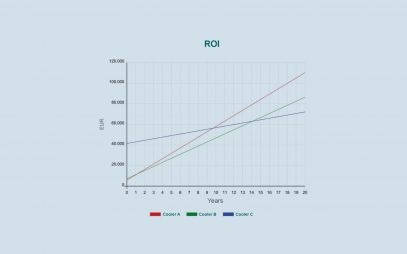
Resource and Efficiency Optimization of Cooling Systems: How to Assess It
The comparison between different cooling technologies: a calculation software can now fulfill this task based on real climatic data.Related products
-
 for medium to large systems
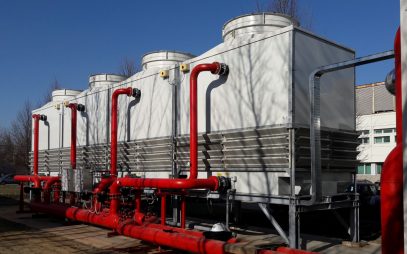
PME-E Open-Circuit Evaporative Cooling Tower
A light and non-corrodible open-circuit evaporative cooling tower: process industry and HVAC operators will be able to count on its multiple versions and ease of transport and installation.
-
 for plants of all sizes with fluids to be maintained
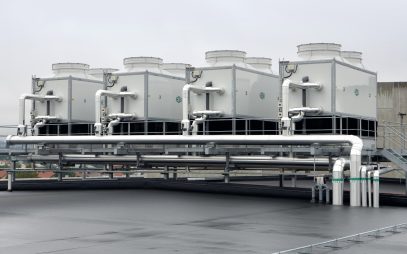
MCC Closed-Circuit Evaporative Cooling Tower
Some industries need to keep the chemical-physical characteristics of the process fluids unchanged: in these cases, MCC closed-circuit evaporative cooling tower joins the game. Possibility to work in free-cooling mode. MCC-EC version available with electronically controlled fans.
-
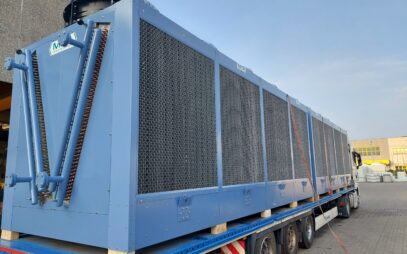 for medium and large plants
PAD-XL W Adiabatic Cooler
Ideal for those who want to use very little cooling water while eliminating its management, or as an alternative to the classic dry cooler, especially with performance in the hottest times of the year in mind.
Newsletter
Subscribe to MITA newsletter and stay updated on technical solutions for industrial and civil cooling and get to know our offer.