


È possibile ottenere la massima efficienza energetica attraverso una serie di accorgimenti: ad esempio, dimensionando un sistema di raffreddamento in base alle esatte necessità di raffreddamento, o poco sovra-dimensionato.
Read all FaqCooling Tower Manufacturer: how to find the Supplier Who best meets your Needs
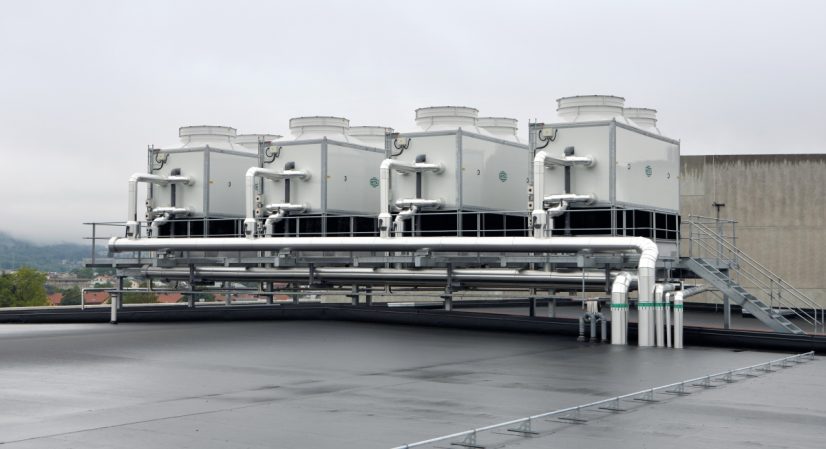
The panorama of cooling tower manufacturers to which turning is broad: it is not always easy and immediate to extricate oneself. Making the best choice, both in qualitative and economic terms, requires you to carefully evaluate some starting elements.
Some elements of reflection are proposed below: they can be useful not to make mistakes or, at least, to be able to direct oneself to the most suitable product for one’s needs.
—
by Giorgio Lorenzetti, Technical Advisor at MITA Cooling Technologies – MITA Editorial Update: April 2026.
1. Company history
It may seem like an element that is not of primary importance, but a company that has been on the market for many years certainly has a wealth of experience and knowledge that can guarantee reliability and continuity.
Naturally, customer requests have changed a lot over the decades: today the market tends to move towards energy optimization of coolers, also through performance control and remote management software (industry 4.0).
A further request which cooling tower suppliers often have to satisfy today? Installation of low-noise solutions, especially in residential or office contexts. On the other hand, the need for cooling towers that are simple to operate and maintain is still topical.
2. References and experience in specific sectors
The references are fundamental to be able to evaluate in which sectors the manufacturers have supplied their cooling systems: that is, which specific technical problems it has faced and have contributed to increasing their knowledge and skills.
Knowing in detail the application and the functional features connected to it, allows you to have the best and most suitable construction solution for the customer: this is especially true if the cooling tower is to be installed in an industrial setting. By way of example: evaporative coolers for the food industry, foundries and heat treatments of metals, chemical industries, plastic processing …
Find All MITA Projects3. Wide range of products and their optionals
A wide and well-assorted range of products shows a great deal of research and development necessary to offer the solution that best suits the specific need. All this including a series of possible construction variants and accessories.
In this sector, the classic “good for all seasons” product does not exist: it is necessary to have solutions dedicated to the individual application. This is particularly true with sectors related to the process industry.
Customization (in the broadest meaning of the term) can concern both the availability of an adequate number of accessories on the single product and the possibility of ranging between cooling systems of different types.
Also in this case, some examples: open and closed circuit, for waters of different nature, factory-assembled modular and field-erected.
Find All MITA Cooling Solutions4. Service
Both pre- and after-sales services represent a further, fundamental element supporting and guiding the choice. A technical consultancy during the offer phase supports the customer in the technical-plant definition that best suits his needs.
A reactive and efficient after-sales service, in case of need, can solve problems related to malfunctions or simply to scheduled assistance interventions. This minimizes annoying (and expensive) downtime.
Find All MITA Services5. European and international sales and service network
Conclusions
As you can easily conclude, all these issues are closely related to each other: a manufacturing company that has developed them over time is certainly the ideal partner for those who have to face, repeatedly or even for the first time, a need for cooling by means of evaporative cooling towers.
Ask for AdviceCooling Requirements: Frequently Asked Questions and Expert Answers
Choosing the best industrial cooling system depends on several factors. Among them: the required cooling capacity.
Read all FaqVariable-speed fans, controlled by inverters, adjust the airflow according to the thermal load.
Read all FaqEvaporative and adiabatic cooling both take advantage of air to lower the temperature of a process fluid (water, water and glycol, gas).
Read all FaqBoth systems use water, but in different amounts, in different ways, and with different levels of efficiency. The direct evaporative
Read all FaqThe structure and components of the two systems are, of course, a consequence of the two different operating principles.
Read all FaqSome main advantages can be enumerated, related to reduced water use and optimized operation during different seasons and times of the day.
Read all FaqModern evaporative coolers use automatic blowdown systems controlled by conductivity sensors, partial recovery of discharge water, and optimized make-up strategies. Adiabatic systems, on the other hand—with the proper use of sensors and PLC-based parameter settings—use water only during periods of maximum thermal load, reducing overall consumption compared to traditional cooling towers (though with some loss of efficiency). The adoption of recovery circuits also allows part of the water to be reused in any cooling system that relies on this resource.
Read all FaqIn an evaporative system, approximately 2% of the mass to be cooled evaporates and is released back into the environment.
Read all FaqChoosing the system best suited to your needs depends on several factors, mainly related to the specifics of the individual plant project to be developed: an exchange of information with a cooling consultant is often helpful.
Read all FaqThe calculation of ROI in a cooling system is a percentage indicator that shows how much economic value is generated compared to the capital invested.
Read all FaqThe Life Cycle Cost (LCC) is a calculation method used to evaluate the total cost of a cooling system over
Read all FaqThis is not something to worry about: the cooling consultant knows the right questions to ask for the selection of the best cooler, supported also by advanced software for calculation, selection, and resource optimization.
Read all FaqYes, there are calculation and sizing software: some manufacturers and cooling consultants use them in recent years to make a selection that is as tailored as possible to the needs of the individual project.
Read all FaqSelection software makes it possible to simulate thermal loads, climatic conditions, and design variables in order to determine the optimal configuration of cooling towers, dry coolers, or chillers. They provide comparative analyses of capacity, energy consumption, noise levels, and operating costs. The goal is to ensure the right balance between performance, energy efficiency, and operating expenses.
Read all FaqDuring the design phase, the use of selection and configuration software makes it possible to compare different solutions—chillers, cooling towers, adiabatic coolers, or dry coolers—by simulating their seasonal performance and heat loads. These digital tools also estimate energy and water consumption and help optimize system sizing.
Read all FaqResources
Best practices
Read all Pieces of Advice by MITA Cooling TechnologiesWhat to Know
Find Out All Technical TermsTechnical Articles
Read All our Technical ArticlesNewsletter
Subscribe to MITA newsletter and stay updated on technical solutions for industrial and civil cooling and get to know our offer.