2. What is a Dry Cooler and How Does it Work?
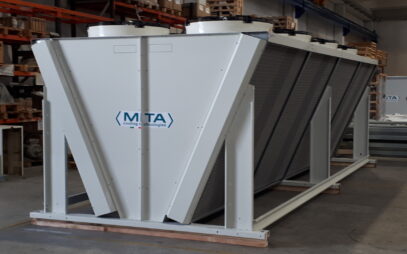
Dry coolers, also known as air coolers or dry cooling systems, are an effective solution for heat dissipation. Their main feature is the exclusive use of ambient air as the cooling medium. The closed-circuit design protects process fluids from external contamination, safeguarding the system’s integrity.
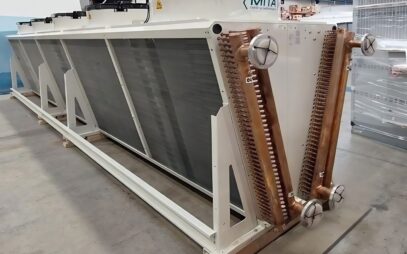
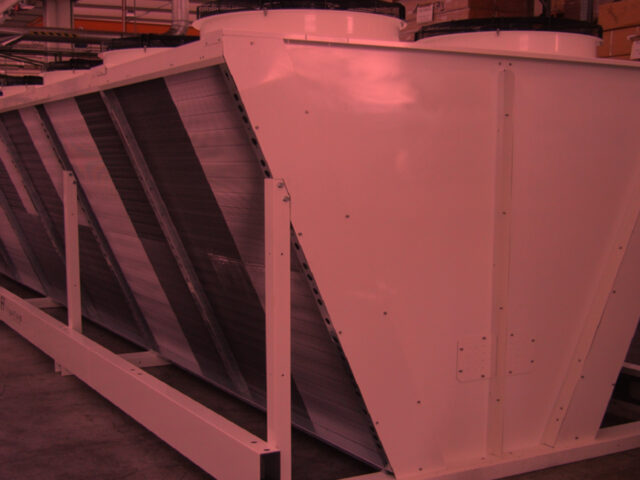
The operation is based on the principle of convection cooling. Outside air, drawn in and pushed by one or more fans, passes through finned coils, which contain the tubes where the fluid to be cooled flows. The tubes themselves are embedded in thin metal plates (the fins) that amplify the heat exchange with the air. The air absorbs the heat from the fluid and is expelled into the environment. It is crucial to know that the outlet temperature of the fluid can never be lower than the dry-bulb temperature of the outside air, making these systems ideal for applications requiring medium-to-high fluid temperatures.
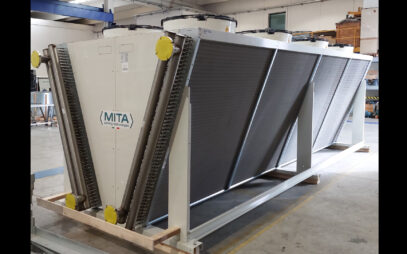
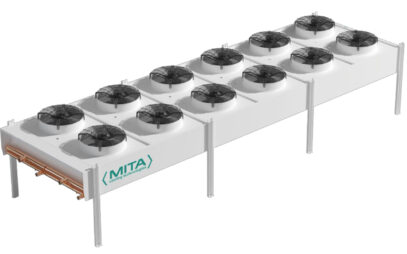
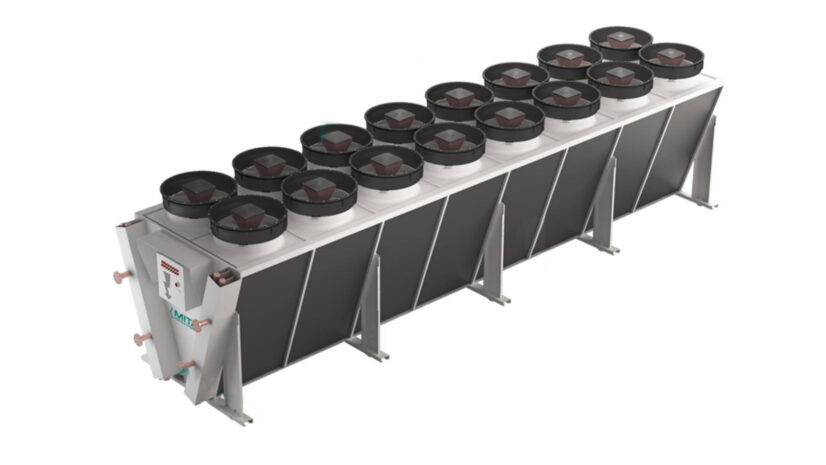
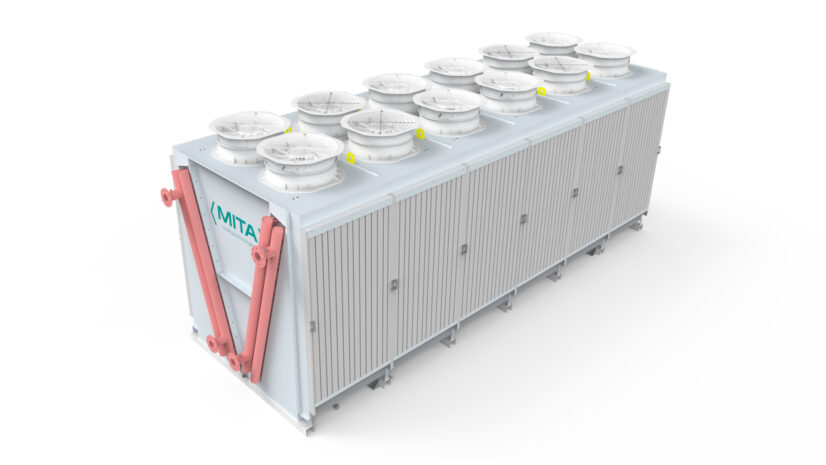
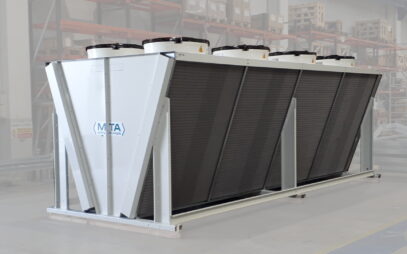
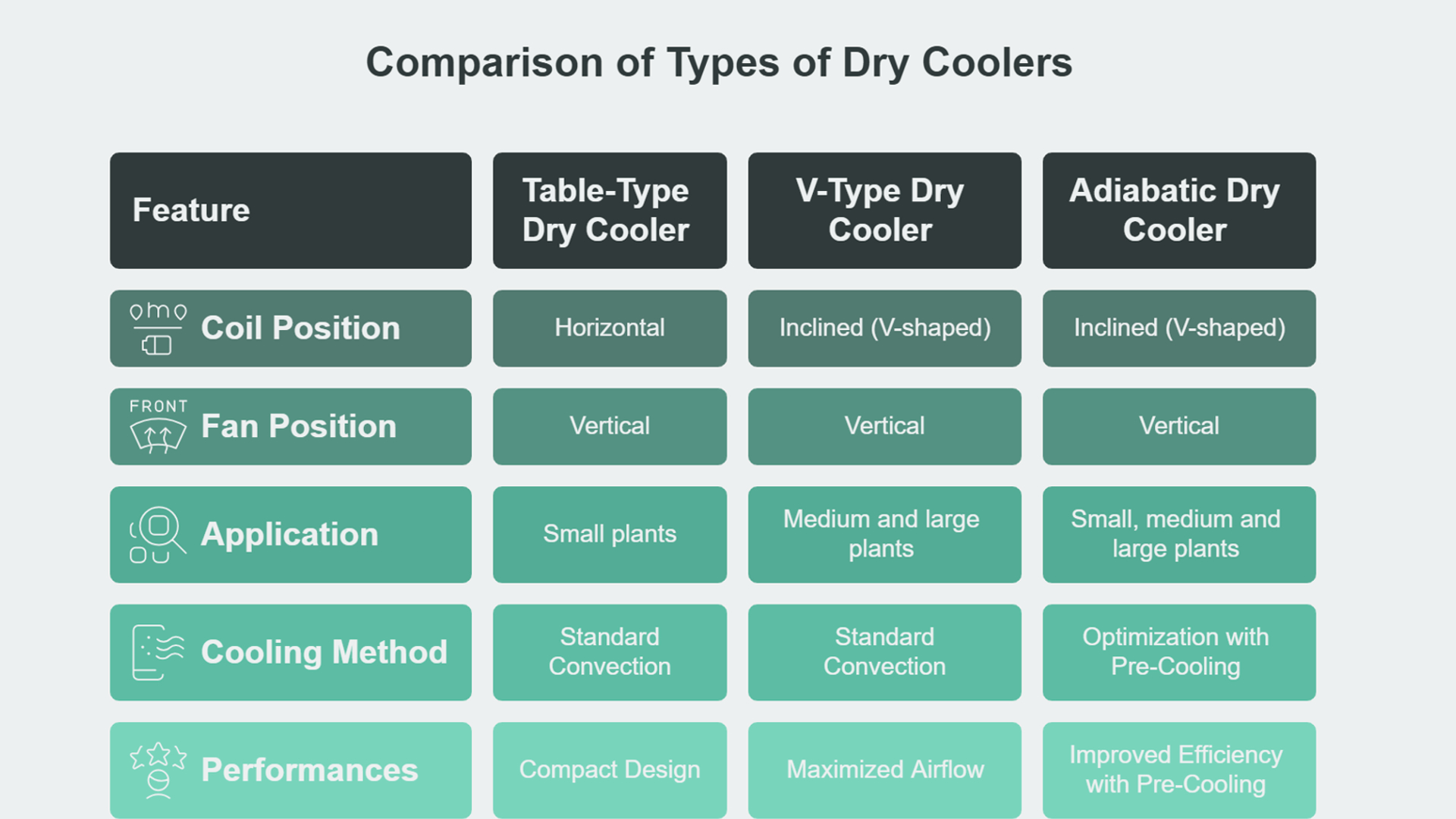
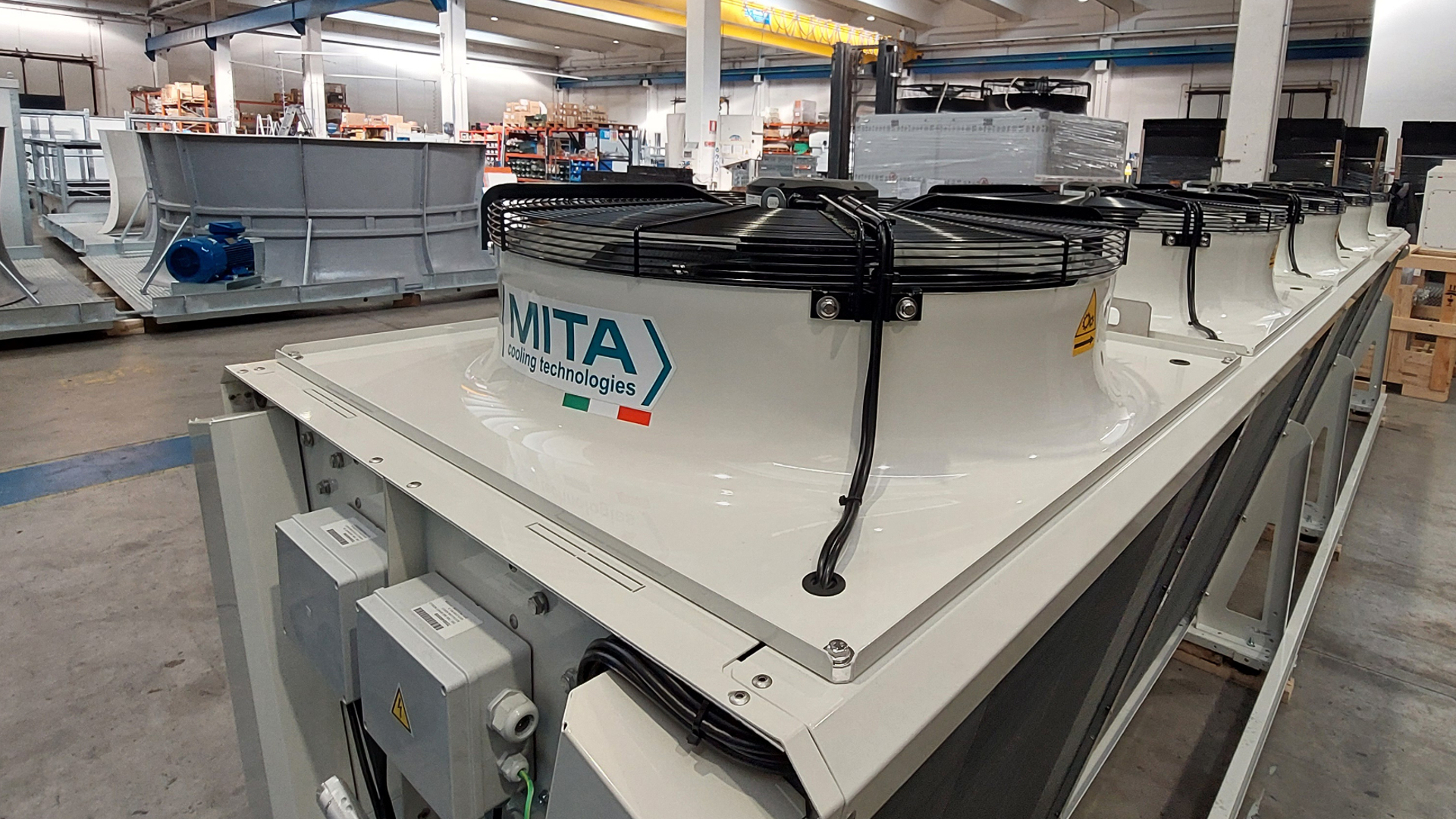
Typical structures include a closed circuit with finned coils, fans driven by high-efficiency electric motors, and a robust frame, often made of galvanized steel, to protect the internal components. There are different configurations to suit plant requirements:
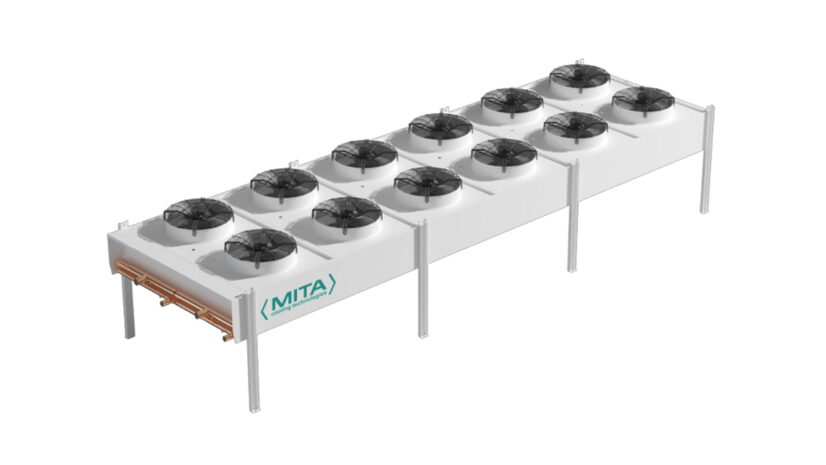

Dry Coolers: Complete Guide to Industrial Air Cooling
Read the article and find out more As synonyms for “dry cooler”, you might encounter other terms…
air cooler or industrial air cooler,
air-cooled dry cooler,
air cooler or dry air cooler,
finned-coil cooler,
air cooling system or air cooling technology.