2. Complete guide to Industrial Process Chillers
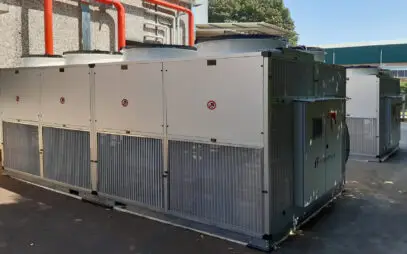
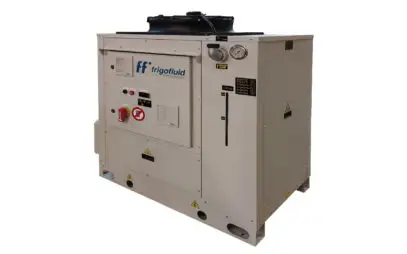
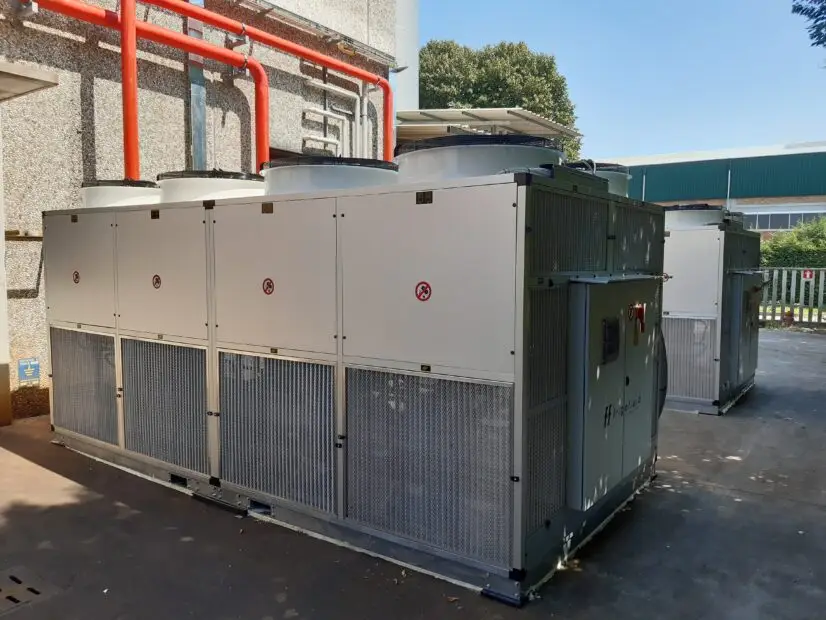
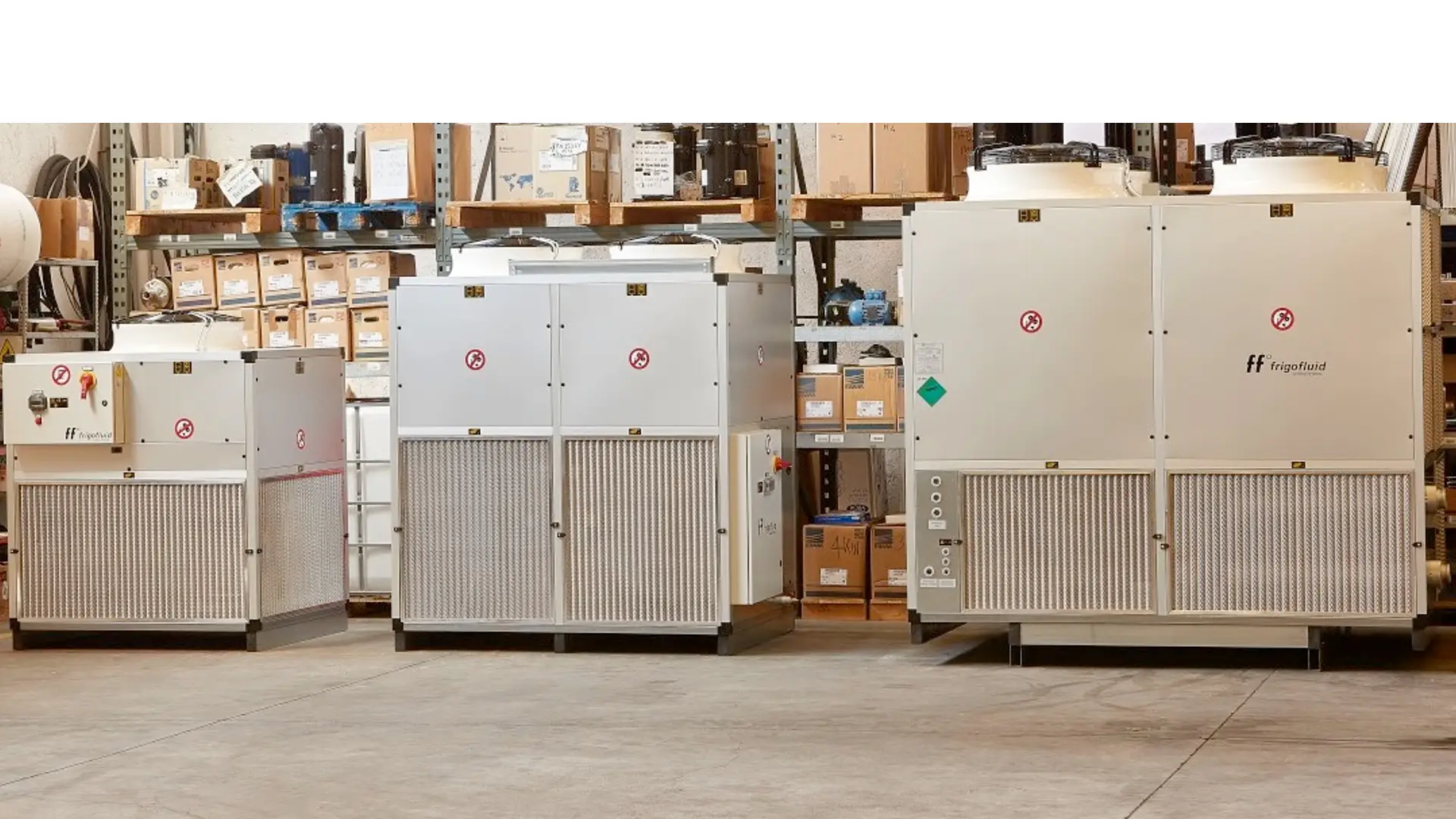
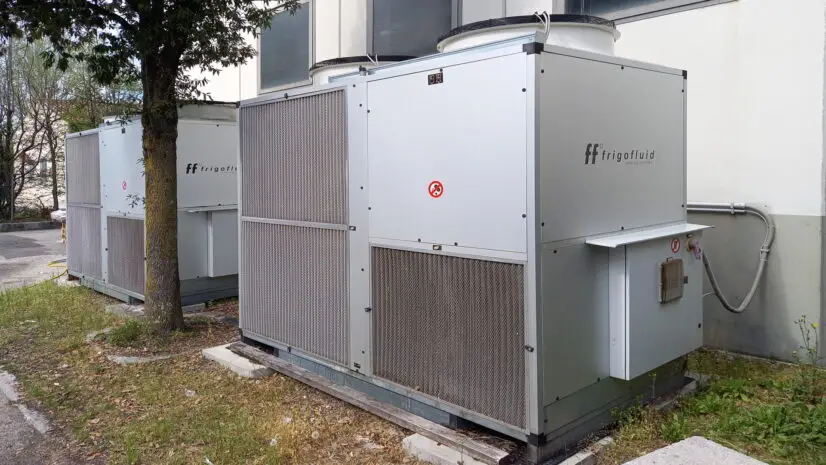
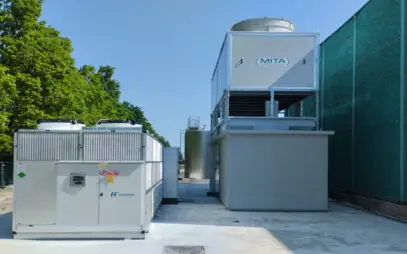
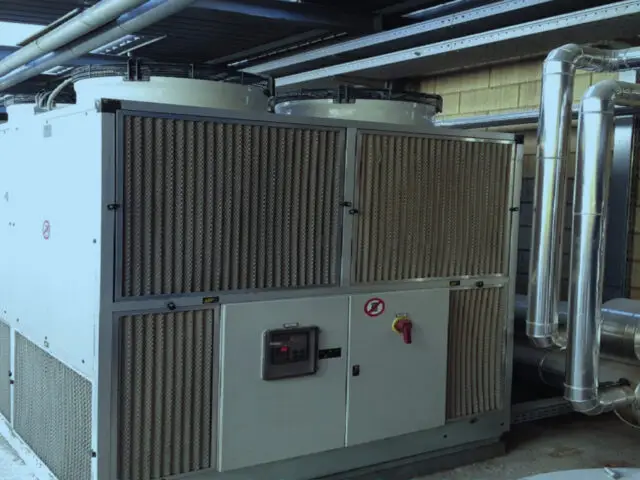
What exactly is an Industrial Chiller and when is it needed? An industrial chiller is a refrigeration system designed to remove heat from a process fluid, usually water or a water-glycol mixture, through a refrigeration cycle consisting of multiple components: compressor, condenser, evaporator, and expansion valve. Once cooled by the chiller, the process fluid can then circulate again through process equipment (heat exchangers, molds, machinery) to control its temperature.
The chiller unit is the heart of many industrial process cooling systems.
You might find these equivalent terms:
compression chiller,
cooling chiller or refrigeration chiller,
refrigeration unit or refrigeration group,
refrigeration system or refrigeration plant,
industrial cooler,
industrial chiller units,
refrigeration unit.

When is an industrial chiller the right solution – as an alternative to cooling towers, dry coolers, and adiabatic coolers?
You need an industrial chiller in these cases.
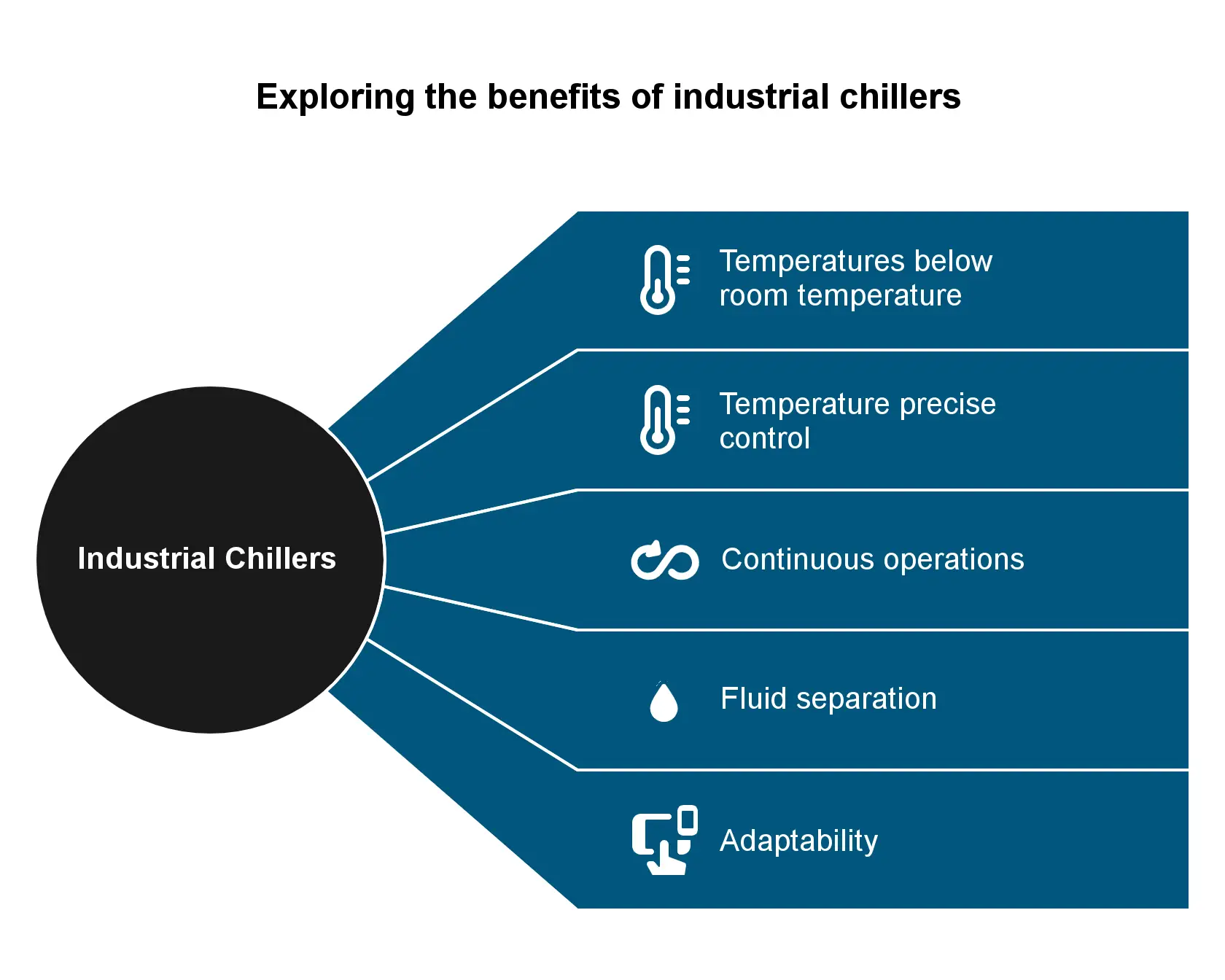
Need for process temperatures below ambient temperature. If the industrial process requires the working fluid to be brought well below the ambient temperature, or even sub-zero (e.g., for cooling molds, machinery, or sensitive products), mechanical cooling via a chiller is essential. Evaporative or adiabatic systems, in fact, cannot go below the wet-bulb temperature of the air.
Precise and constant temperature control. Industrial chillers offer very accurate control of the fluid temperature, which is essential to guarantee product quality and operational safety in sectors such as food, pharmaceuticals, chemicals, plastics, printing, and metalworking. This control reduces the risks of overheating, machine failures, and production defects.
Critical processes or continuous operation. Process chillers are designed to operate continuously, with high reliability and robustness, even in demanding conditions and with variable loads. They are preferable to standard cooling systems when production downtime is not acceptable.
Need for separation between process fluid and refrigerant fluid. In applications where it is essential to avoid contamination between the fluid and the refrigerant (e.g., in the food, pharmaceutical, or chemical sectors), chillers are combined with dual-circuit heat exchangers, ensuring safety and hygiene.
Adaptability and customization. Industrial chillers can be custom designed and configured to meet specific project requirements, both in terms of capacity, fluid type (water, water-glycol, etc.), and operating conditions.
When an industrial chiller is NOT necessary. If the required cooling is limited to simply lowering the temperature to values close to ambient, and precise or continuous control is not required, simpler systems such as evaporative towers, dry coolers, or adiabatic coolers may be sufficient.