


The performance of your cooler, measured
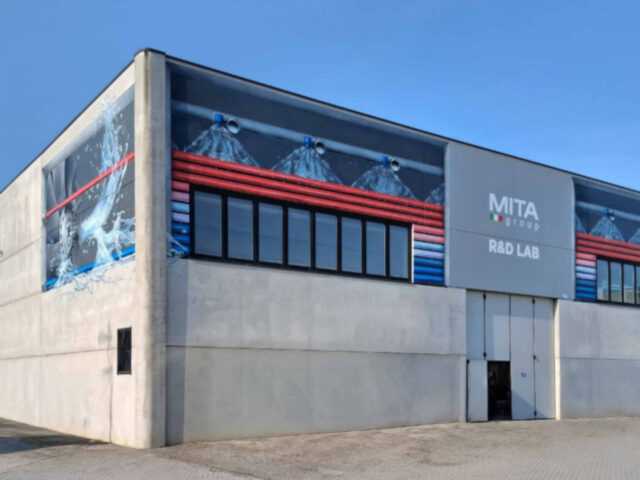
In most cases, a cooling system is chosen based on nameplate data. At the MITA Group R&D Lab, that data becomes measurements: tests on the real unit under controlled and repeatable environmental conditions, with a test report delivered to the customer.
1. A laboratory for verified performance
Anyone who designs a cooling system works with numbers that must hold up for years: energy and water usage, production continuity, and testing verification. Our work has always started with gathering information and making a selection based on real site conditions. Starting in 2026, we can take it a step further: measuring every single unit.
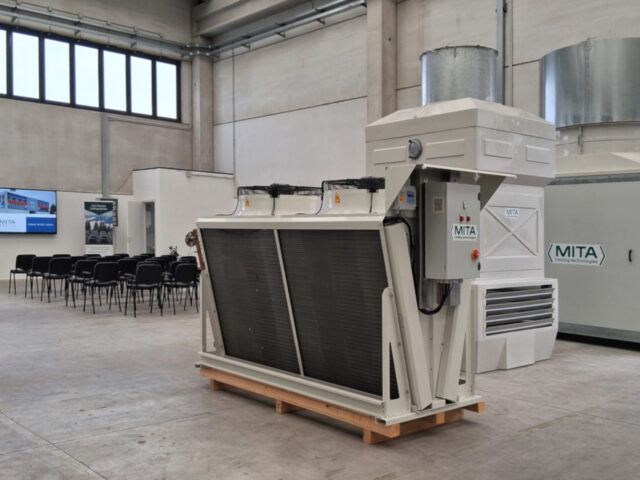
The MITA Group R&D Lab is available for all cooling and refrigeration technologies from MITA Group: evaporative cooling towers, dry coolers, adiabatic coolers, chillers, and related components. It is a strategic investment aligned with our mission: to be the process cooling consultant for the customer—putting their project at the center.
A direct comparison between measured and stated performance, a test report to attach to the project, and an efficiency choice based on the plant’s real operating profile.
Request a test for your cooler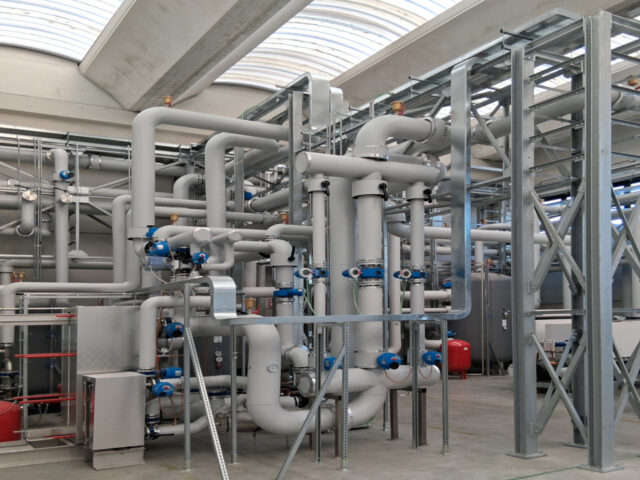
2. Two test stations, all technologies
The system serving the laboratory is a hydraulic setup with hot and cold circuits, powered by 2 chillers, 2 boilers, and 1 adiabatic cooler. It serves two complementary test stations:
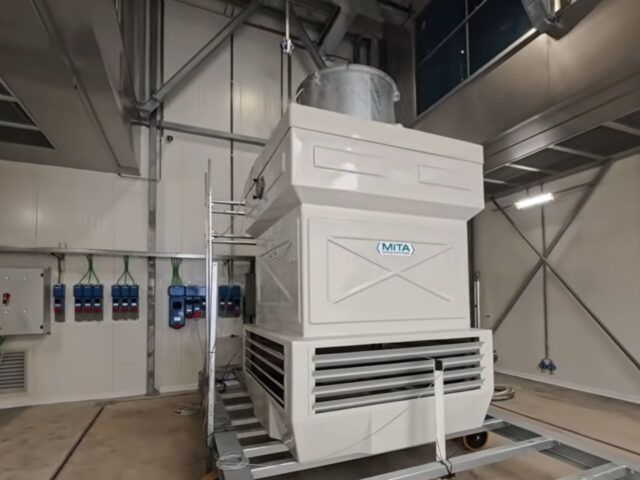
Station A, climatic chamber: indoor testing cabin measuring 8.0 x 9.3 x 7.5 m, with temperatures from 4 °C to 50 °C and relative humidity from 30% to 100%. It tests A/W chillers, dry and adiabatic coolers, and open/closed towers, with water cooling capacities up to 350 kW.
Station B, outdoor test area: an area outside the building dedicated to testing the same unit types with thermal power to be dissipated up to 1 MW and a flow rate of 250 m3/h.
In addition to system sensors, both stations feature panels for connecting independent probes: you can bring your own instrumentation, or that of a third-party body, and verify independently.
Book a laboratory tour3. How we measure: data is traceable
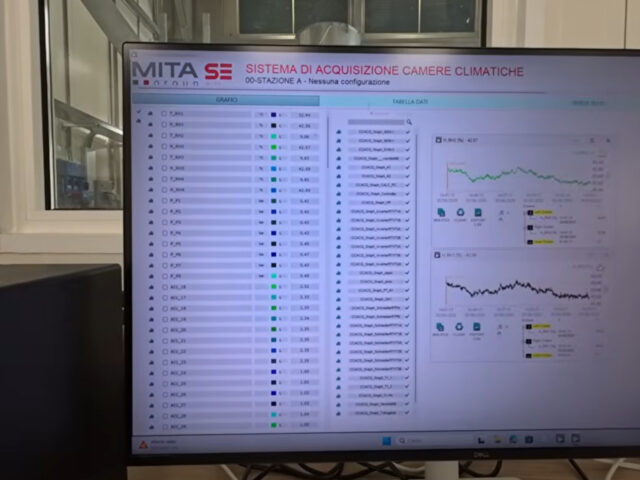
Acquisition and control systems are based on National Instruments hardware platforms, with controllers using the CompactRIO architecture. Experimental variables are acquired at 1 Hz—one recording per second—and stored in processable and verifiable reports. All calibration certificates for measuring instruments are available upon request.
The laboratory and its data acquisition system were designed and built in compliance with the regulations and reference standards for the various unit types:
EN 1048:2014/2016 — dry coolers and adiabatic systems;
ATC 105 — cooling towers;
EN 14511 and Ecodesign 2016/2281 — chillers.
4. Customer benefits
What can third-party entities, engineering firms, and end customers gain from machinery testing at the R&D Lab?
Verified performance: direct comparison between measured and stated performance, under controlled and repeatable environmental conditions.
Custom testing: units are tested prior to delivery under desired conditions, upon customer request.
Recognized method: tests set up according to reference standards for the unit type, with calibrated instrumentation and certificates available upon request.
Documented efficiency: test data optimizes technological selection based on the plant’s real operating profile.
Transparency: at the end, a test report is issued and shared with the customer.
An open laboratory: customers, resellers, designers, universities, certification bodies, and associations can attend tests and request a testing campaign, even on units they own.
5. Focus: how a test is conducted
Let’s look in detail at how the MITA group R&D Lab operates, step by step.
Installation and instrumentation. The unit under test (UUT) is installed in Station A or Station B and connected to the laboratory’s electrical and hydraulic infrastructure. The circuit is filled with water and purged. The unit is then instrumented with the sensors required for the test.
Startup/stabilization. From the control room, using the supervision synoptic, set-points for storage tanks SR1 and SR2 are set; the system coordinates the adiabatic cooler, chillers, and boilers.
Test conditions. In Station A, the cabin air temperature and relative humidity are set; once the UUT is started, fans are adjusted to achieve uniform intake air distribution and prevent recirculation. In Station B, the UUT is started according to the scheduled test procedure.
Acquisition. UUT and system operating parameters are acquired and recorded at 1 Hz, stored in log files for analysis and result validation.
Closure and report. Controlled shutdown sequence, data processing, and issuance of the test report.
Resources
Best practices
Read all Pieces of Advice by MITA Cooling TechnologiesWhat to Know
Find Out All Technical TermsTechnical Articles
Read All our Technical ArticlesTools to help you choose
Preliminary plant evaluation
Tailor-made design
Newsletter
Subscribe to MITA newsletter and stay updated on technical solutions for industrial and civil cooling and get to know our offer.